The AFC Champions League Elite rounded off its league stage over the past fortnight, as the very best in Asia set their sights on the knockout stage next month; the stage almost set for the final run-in, heading towards the finals tournament in Jeddah in April.
These final two matchdays, in typical ACL Elite fashion played out in a state of contrasts across both East and West regions. These were the first competitive continental fixtures of the calendar year, yet also the end of a stretched six‑month first round.
Across the continent, it made the competition feel slightly out of sync: many East Asian sides are still shaking off pre-season rust, while a number of clubs in both regions had already wrapped up progression back in December.
And yet, for all the disjointedness, there was still a spectacle to be settled. Going into the final matchday, 11 teams were still living on the edge, with qualification in the balance. That’s where the league phase is intended to come into its own, late twists, calculators at the ready, and the sense that one moment could flip a campaign. Well, that’s the intention.
What followed was a fortnight that didn’t just settle the table, it sketched out the albeit predictable shape of the knockouts to come: Saudi and Japanese regional dominance, and the occasional outsider trying to wedge the door open long enough to spring a surprise.
Benzema’s shadow motivates a continental run-in
If the conclusion of the ACL Elite league stage was supposed to demonstrate continuity, January’s Saudi transfer window had other ideas.
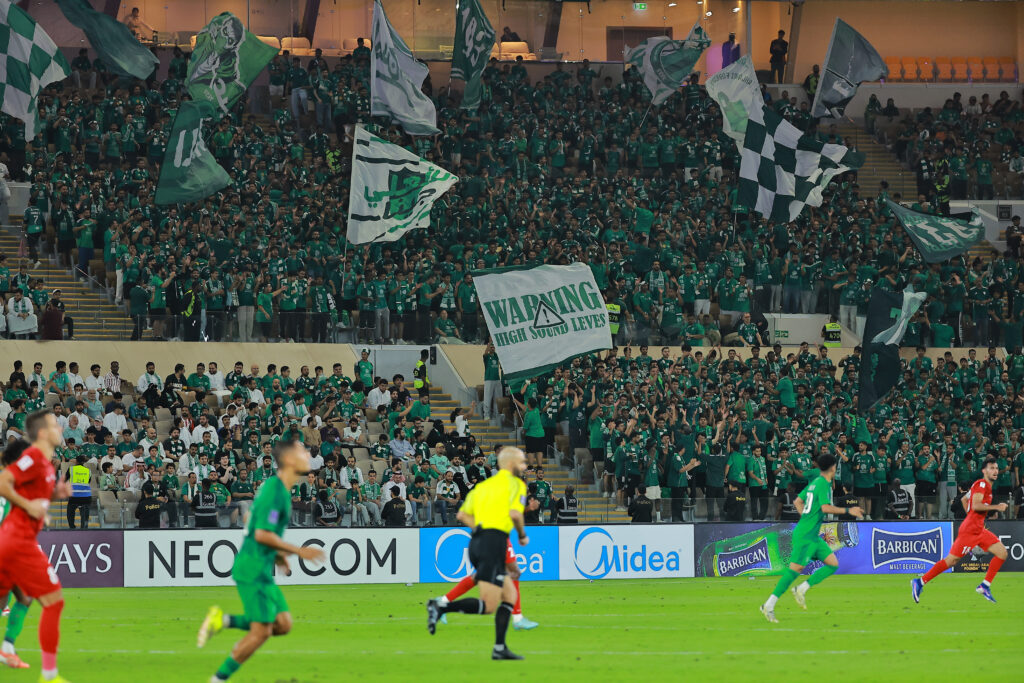
Karim Benzema’s move from Al Ittihad to Al Hilal on deadline day casts a long shadow across both the domestic title race and the continental run-in. For Al Ittihad, still with progression not entirely sealed heading into the final fortnight, losing their superstar No.9 late on, alongside the crucial departure of N’Golo Kanté, was hardly the sort of calm build-up Sergio Conceição would have asked for.
But rarely does Saudi football respect narrative logic. In the same way the squad shake-up has sparked something domestically, it has also handed Al Ittihad a sharper, motivated and more mobile edge in Asia.
The response to Benzema’s emotional departure was emphatic; a 7–0 demolition of progression rivals Al Gharafa wasn’t simply a win, but a public reassertion. Central to it was the return of playmaker Houssem Aouar, Algeria’s elegant midfielder, back from his pre-AFCON injury and instantly playing like a man who’d spent weeks chomping at the bit to return to the action.
Aouar’s hat-trick was headline enough, but the performance was bigger than one player: the speed of Al Ittihad’s combinations, the aggression of their second balls, the conviction illustrated in the final third – there was a point to prove amidst the Benzema psycho-drama. In a season that has at times threatened to get away from them, they responded emphatically.
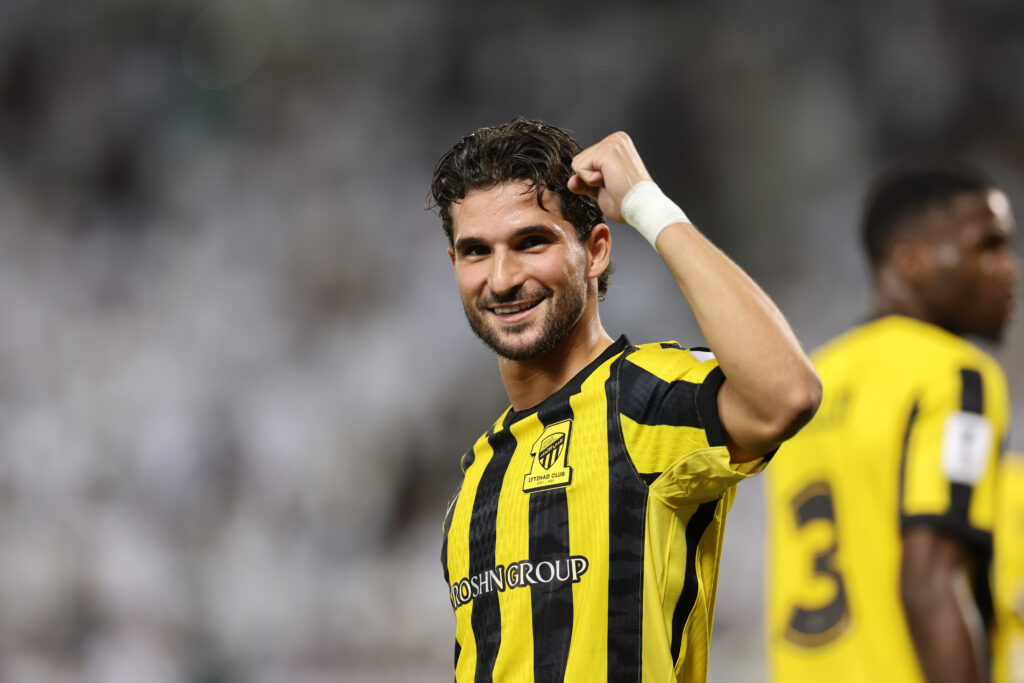
A week later, they went up the gears again in Doha, blowing Al Sadd away early to secure a top-four finish and the prize that comes with it: a favourable home second leg in the Round of 16. Four-one, three goals inside 35 minutes, and the sort of swagger that only returns when a team starts to believe its own quality again.
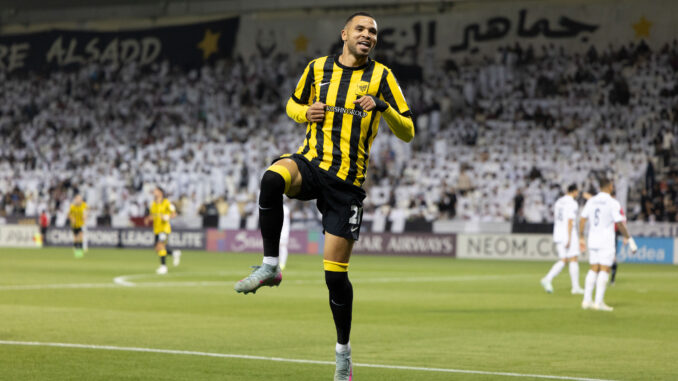
Aouar delivered another moment of class, but the new name on everyone’s lips came through loud and clearly: Youssef En‑Nesyri, cool and clinical, scoring in his second straight ACL Elite game since arriving from Fenerbahçe. Karim, who?
En‑Nesyri may not match Benzema’s global stature, but what he offers is movement, vertical threat, and a willingness to demonstrate the unglamorous pressing approach from the front. For Al Ittihad, that might matter more in knockout football than another poster boy.
For Al Hilal, Benzema’s arrival is a commercial and domestic statement, but in continental terms it comes with an important asterisk. Having already featured for Al Ittihad in the ACL Elite earlier in the campaign, he’s ineligible for Al Hilal’s own pursuit of a ninth Asian crown.
That leaves an oddly exposed reality: the Blue Wave must lean on a striker who has been catching more heat than headlines. Darwin Núñez, omitted domestically, mocked regularly, and seemingly drifting towards a January exit, now finds himself still central to Al Hilal’s ACL Elite story.
Simone Inzaghi, with top spot already secured in December, rotated heavily for the final two matchdays, with Núñez leading a side that resembled something close to a B-team.
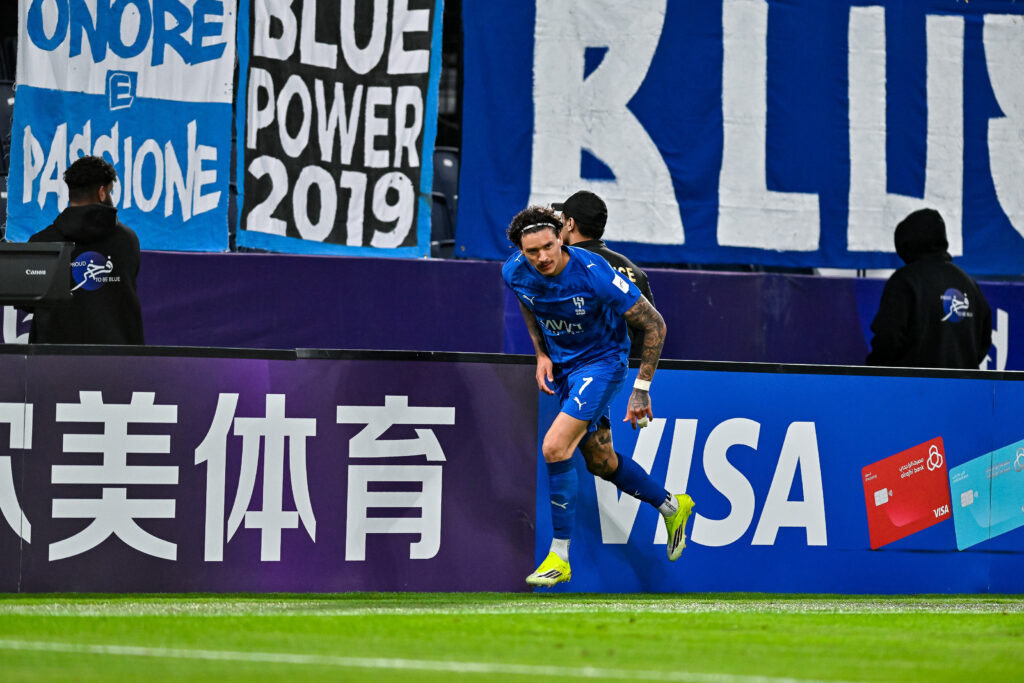
A 0–0 draw away to Shabab Al Ahli invited targeted frustration, but this week’s win over Al Wahda offered the kind of small, timely shift that can change a player’s month: a trademark header from a Rúben Neves free-kick to end a seven-game drought, followed by a poacher’s finish sliding in Sultan Mandash’s cross.
Benzema won’t feature in the ACL Elite knockouts, but he may go onto shape it. En‑Nesyri and Núñez threaten not to only be the backup options they once were primed as, but the potential sparks that define what comes next.
Transition doesn’t hold back progress
In the West, Saudi depth has become the defining feature of contemporary ACL Elite football. In the East, Japan’s control has been the quieter constant, less glamour signings, but more systemic depth, and increasingly a ruthless efficiency.
The final fortnight was particularly revealing because it functioned as more than just two standalone matchdays: it was a developmental window. With Japanese sides still building towards the domestic season, with the J. League transitioning to an autumn/spring calendar to align more closely with the continental schedule, these fixtures landed amid the strange overlap of pre-season sharpness and competitive rhythm.
Whatever transition was in play, it was smoothly navigated on the pitch in the ACL Elite.
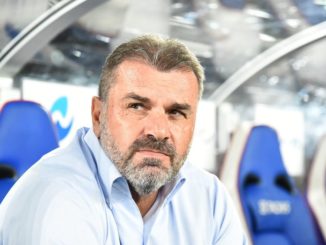
At Sanfrecce Hiroshima, the new era under Bartosch Gaul has started with the kind of calm competence that promises a smooth handover rather than a dramatic reset. Unbeaten domestically, unbeaten his first two games in the ACL, and, crucially, finding new solutions in the final third.
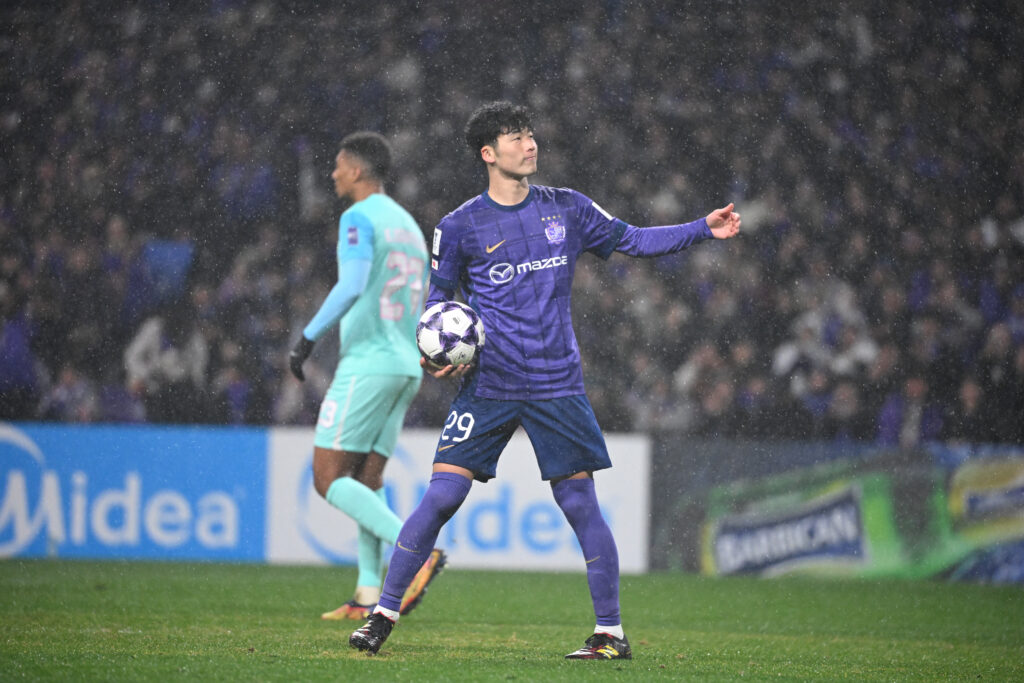
Against Johor Darul Ta’zim, Sanfrecce recovered from conceding an early goal before leaning on the emerging story of this late league-stage window: Akito Suzuki. The winter arrival from Shonan Bellmare looks like the sort of signing that turns what was already a good side into an effective one; predatory movement, a decisive finisher, and a willing runner from the front, that is already tipping the balance.
Suzuki followed a debut goal the weekend before, with a brace against the Malaysian champions, and his early impact has immediately addressed the most familiar criticism of Sanfrecce in recent seasons: control without an end product.
A week later in Seoul, the conditions were brutal, a pitch that looked like it had absorbed every drop of winter, but the pattern was the same. Sanfrecce went 2–0 down, refused to panic, and dragged the game back to level terms deep into stoppage time.
Suzuki played the foil rather than the finisher this time, working around Ryo Germain and substitute Kosuke Kinoshita as Sanfrecce turned late pressure into a threat that Seoul couldn’t fully contain.
Over in Kobe, Vissel’s self-styled ambition to become the ‘No.1 club in Asia’ has always jarred against reality. But under new coach Michael Skibbe – heading over from the aforementioned Hiroshima – it’s beginning to look like a credible pathway rather than a mere motivational slogan.
In flipped fixtures to those of Sanfrecce: Vissel beat Seoul at home, before sending a heavily rotated side to Malaysia, suffering a narrow defeat that meant more for the hosts than the visitors. Skibbe’s value is rarely about individual stardom, it’s been about coherence, tactical balance, and making key players sharper within a collective structure.
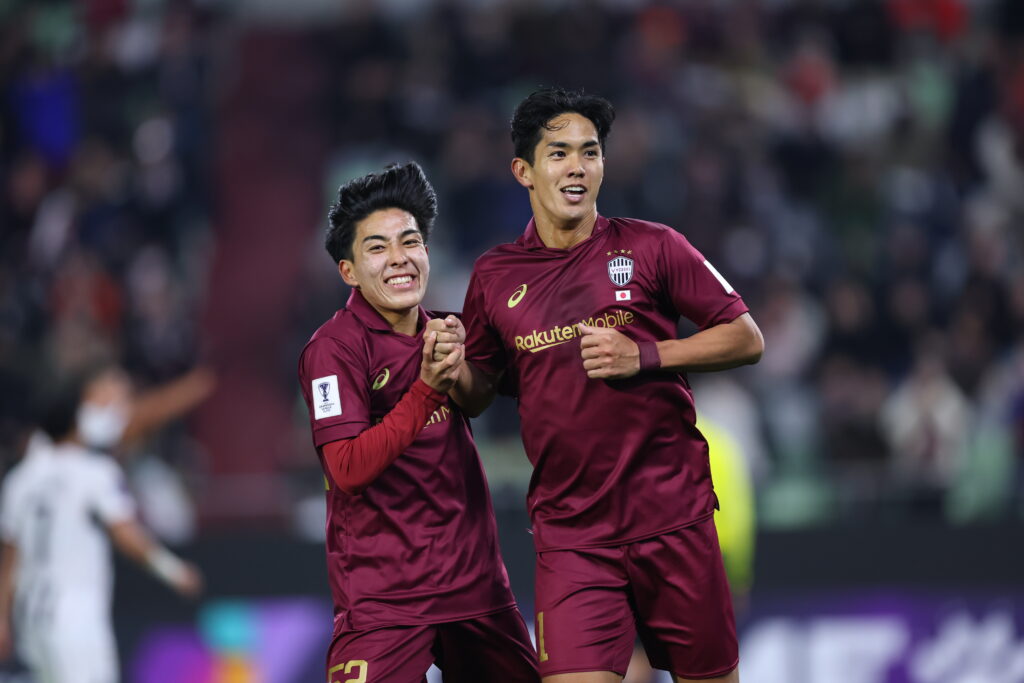
Early signs from once unpredictable individual talents, however, are encouraging. Yoshinori Muto has started the year with purpose, centre-back Matheus Thuler is experiencing a new lease of life, alongside the surprising goalscoring form of Gotoku Sakai across the fortnight, underlines a squad with multiple outlets and a growing self-belief.
Neither side is the finished product, but they are already demonstrating why Japanese clubs remain the most likely contender to the Saudi Pro League over the coming months: coherence and effectiveness, all while transitioning under new faces in the dugout.
The table reflects that potential. All three Japanese sides, including Machida Zelvia, who topped the league phase after victories over Shanghai Shenhua and Chengdu Rongcheng, progressed with minimal fuss.
With Jeddah only two months away, it’s becoming harder to argue against the most obvious endgame: a Saudi vs Japan head-to-head, with the chasing pack plotting to upset the party.
Al Sadd hit their stride at the right time
On paper, losing 4–1 to Al Ittihad on the final day should raise questions about Al Sadd’s ACL Elite credentials for the latter stages. However, in reality, their continental story over the past two months has been one of upward momentum, exactly the kind that can tip the balance heading into knockouts.
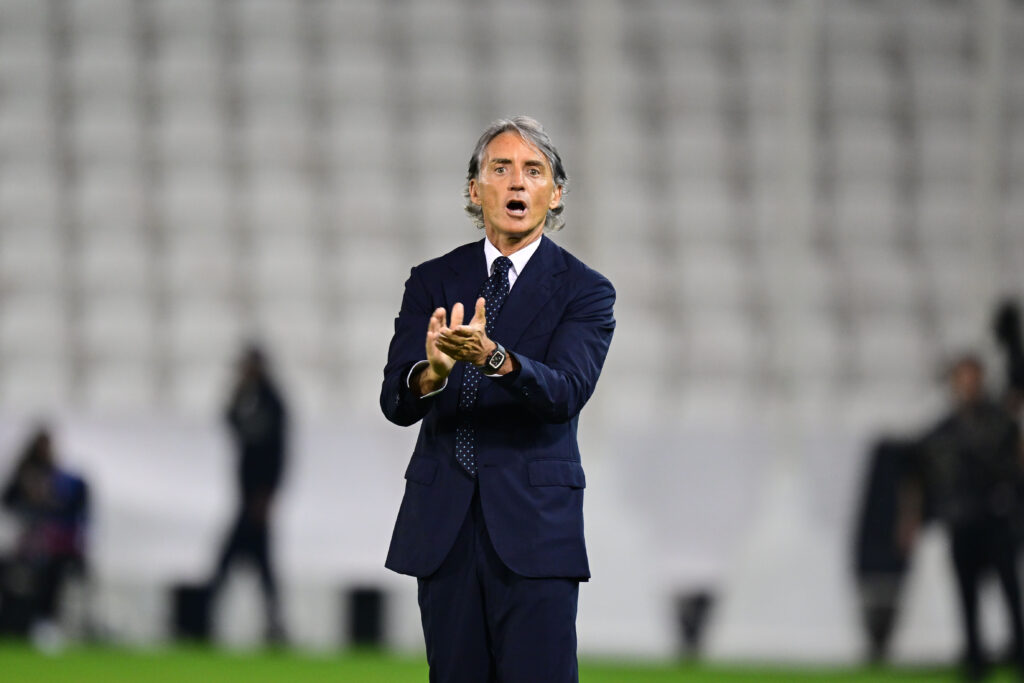
It’s true, the Roberto Mancini era in Doha began slowly, but since their December win over Shabab Al Ahli, something has clicked. Their league-stage start was poor with just two points from their opening five matches, yet they found the wins they needed when the margins got tight, beating Tractor last week to squeeze over the line without needing anything against Al Ittihad on the last day.
The domestic form has been the catalyst in their growth: five straight wins in the Qatar Stars League, heading top of the table for the first time this season at the end of January, with a statement 2–1 victory over title rivals Al Gharafa.
But the most impressive part hasn’t simply been in the results, but in the manner of the performances. Al Sadd are playing with confidence again; high tempo, committing numbers forward, and the kind of attacking fluidity that only returns when players start to gel and trust in their coach’s methods.
Rafa Mujica has been one of the clearest beneficiaries. Previously used in a shadow striker role under Félix Sánchez, he has looked far more natural as a central reference point under Mancini. An ACL Elite hat-trick in December lit the fuse, followed up with goals in both fixtures over the last fortnight.
His combinations with Giovani and Roberto Firmino have been impressive, but the true catalyst remains Akram Afif behind him. As with Qatar’s national team, the side’s ceiling has too often been tethered to the enigmatic playmaker’s mood and momentum. When Afif is fit, focused, and flowing, Al Sadd become a problem no-one wishes to face.
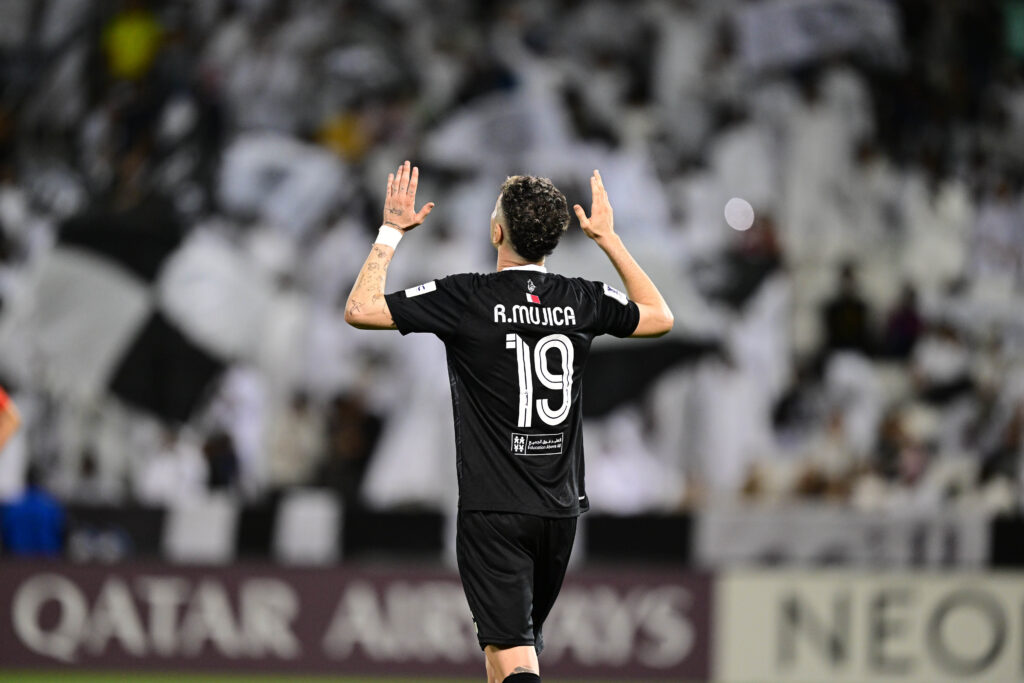
In the last month, he has been incredible; visionary, sharp between lines, and in sync with his front three. If that level holds, especially into the summer World Cup, Qatar benefit far beyond club football.
In the knockouts, any Saudi draw is a daunting prospect, especially Al Hilal, but Al Sadd won’t settle as a meek underdog. Expect fireworks in Doha next month, with the Qatari champions out to deliver a credible upset.
Photos: Asian Football Confederation