The world’s most populous nation is ready to compete in what is arguably the most significant tournament in its recent history.
The AFC Women’s Asian Cup 2026 comes in a period when Indian football has been going through turbulent times, as far as men’s football is concerned.
The senior men’s national team has failed to qualify for the AFC Asian Cup 2027 for the first time since 2015, while the Indian Super League (ISL) season got underway only last week after a months’ long delay after a dispute between the All India Football Federation (AIFF) and its long-term commercial partner over the Master Rights Agreement.
Contrary to that, women’s football in the nation has been on the rise, with India qualifying for the AFC Women’s Asian Cup for the first time since 2003 (with the team having to withdraw in the 2022 edition when they were hosts due to a COVID-19 outbreak).
“It’s really massive for Indian football. Our qualification for the AFC Women’s Asian Cup is like a ray of hope for Indian football right now,” said Crispin Chettri, the man who was in charge of India’s qualification campaign, in an exclusive conversation with The Asian Game.
“I’m really proud of my players. We are there just to help them, but it’s they who did all the hard work on the pitch.”
Cultural challenges in India
For the world’s most ethnically diverse country — with an astonishing 2,500 distinct ethnic groups — there are several challenges that the national team has to overcome before competing against the finest.
Football is a sport where there are players from every region in the Indian national team, which means players from different cultures, faiths and linguistic backgrounds are assembled to fight together for a common cause.
“I think the hunger to play for the badge is much more important than the name at the back of your jersey and I have been able to make the players understand about it,” remarked Crispin.
And even then, there remain socio-economic challenges at the ground level. Before one becomes a celebrated athlete, support is hard to come by, and this normally makes many question their career choices.
It also means that parents tend to look at alternative career options even when their child is talented in football, and this often causes hindrances in the system. Under these circumstances, Crispin points out how significant India’s qualification in the upcoming tournament is, as it could really mark a positive change off the field.
“The girls who play football in India are breaking barriers,” he explained. This qualification is very important, especially for the younger ones who want to become professional footballers. The situation is completely different from what it is in Europe. For some of them, being part of football gives them motivation to have a decent livelihood.”
The Indian women’s national team assistant coach added: “With this achievement, many parents will start thinking about allowing their daughters to go and play football.
“It will also send a positive message to every state association to make no disparity between men’s and women’s football. This will help us go in the right direction when it comes to women’s football.”
Sometimes you win, sometimes you learn
The journey so far has been far from easy, and Crispin credits the AFC Women’s Champions League with playing a vital role in his understanding of the wider aspect of Asian football.
Having been the head coach of Odisha FC during the 2024/25 AFC Women’s Champions League, the 51-year-old helped his club successfully navigate the preliminary round, defeating Singapore’s Lion City Sailors and Jordan’s Etihad Club on the way to reaching the group stage.
However, what followed was something to forget with Odisha losing all three group matches, including a 17-0 defeat at the hands of Urawa Red Diamonds. Despite this, Crispin sees things differently.
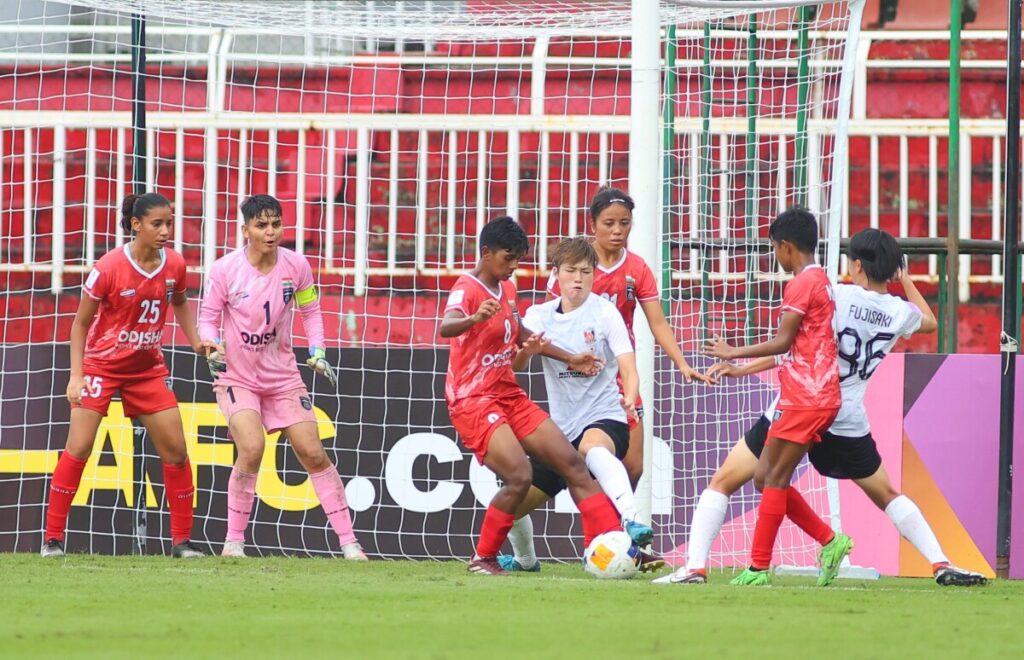
“I was lucky enough to be a part of Odisha FC, where I saw the real level of Asian football in the AFC Women’s Champions League, playing against teams like Japan’s Urawa,” he recalled.
“That experience has helped me a lot in my understanding of the game. I knew we were going to lose because of the difference in standards, and they went on to score 17 goals against us. They celebrated the 17th goal like it was their first goal. That is the kind of attitude we need to instil in our players.”
Just eight months later, a remarkable turnaround saw Crispin guide the Indian national team to a 13-0 victory against Mongolia in their opening match of the qualification campaign for the AFC Women’s Asian Cup 2026.
Seven different players were on the scoresheet for India, with Crispin’s former apprentice at Odisha, Pyari Xaxa netting five goals.
“I’m happy to have been able to impart that attitude (like the Urawa players) to some extent. We scored 13 goals because we were eager to score more even after going seven to eight goals up and that is exactly the kind of hunger that I want to see.”
The time is now!
Further wins against Timor-Leste and Iraq, 4-0 and 5-0 respectively, set up a tantalising winner-takes-all clash against hosts Thailand.
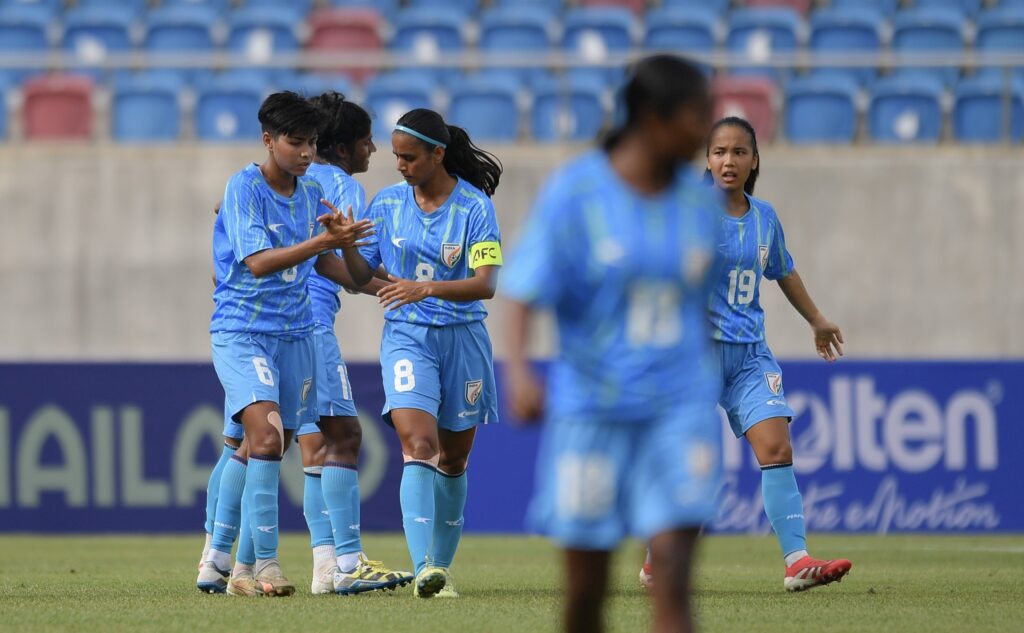
Similar to India, Thailand — who were led by former Japan women’s national team head coach Futoshi Ikeda — hadn’t conceded any goals up to that point, meaning they were brimming with confidence. On top of that, they had participated in the FIFA Women’s World Cup twice in recent years (2015 and 2019) and had competed in every edition of the AFC Women’s Asian Cup since 1999.
These factors highlighted the steep task that India was up against, and on top of that, they were playing away from home in the Northern Thailand city of Chiang Mai.
“We were mentally prepared for that match from our camp in Bengaluru. By the time the Thailand match came around, our mindset was positive,” Crispin shared.
“I told my players to sing the Indian national anthem as loud as they could so that even the Thailand players and their fans would hear us. Sometimes, it’s not about tactics but the motivation and adrenaline rush which makes all the difference.”
The Blue Tigresses started the game with real belief and took the lead in stunning fashion when Sangita Basfore opened the scoring from the edge of the box in the 29th minute, in a goal that has been watched by millions of Indian football fans on repeat.
Thailand equalised early in the second half, but after weathering much of the storm, India hit them with a sucker punch courtesy of a training ground corner routine in the 74th minute.
“We had been practicing that set piece to score a goal like that for six months and for almost eight to nine matches,” Crispin shared. “It shows that we have to be patient and we are moving in the right direction.”
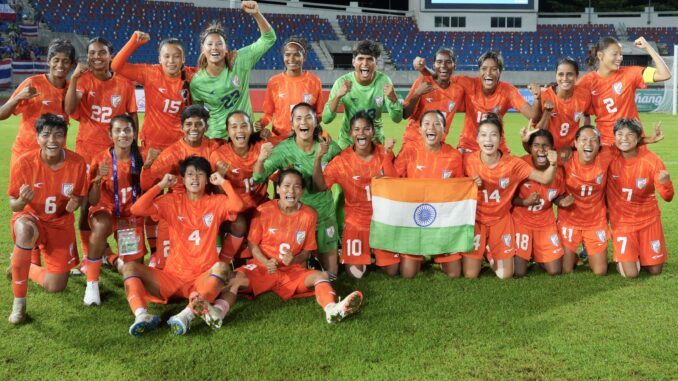
When the full-time whistle blew, Sangita, who proved to be the player for the big occasion scoring both of India’s goals, burst into tears, realising the enormity of the achievement.
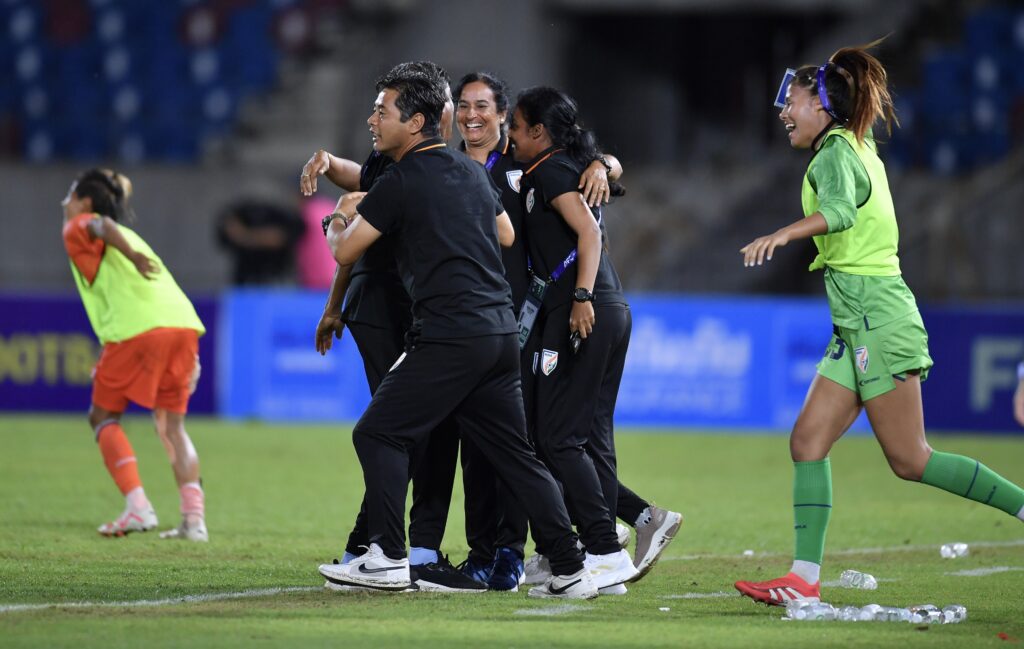
The joyous support staff and the substitutes stormed onto the pitch to celebrate a night that will live long in the memory of Indian football lovers.
“Sangita is like a Steven Gerrard or a Frank Lampard prototype player for us. She’s a box-to-box player and is not scared to go forward and that’s why she was able to score such crucial goals,” expressed Crispin while speaking on the midfielder.
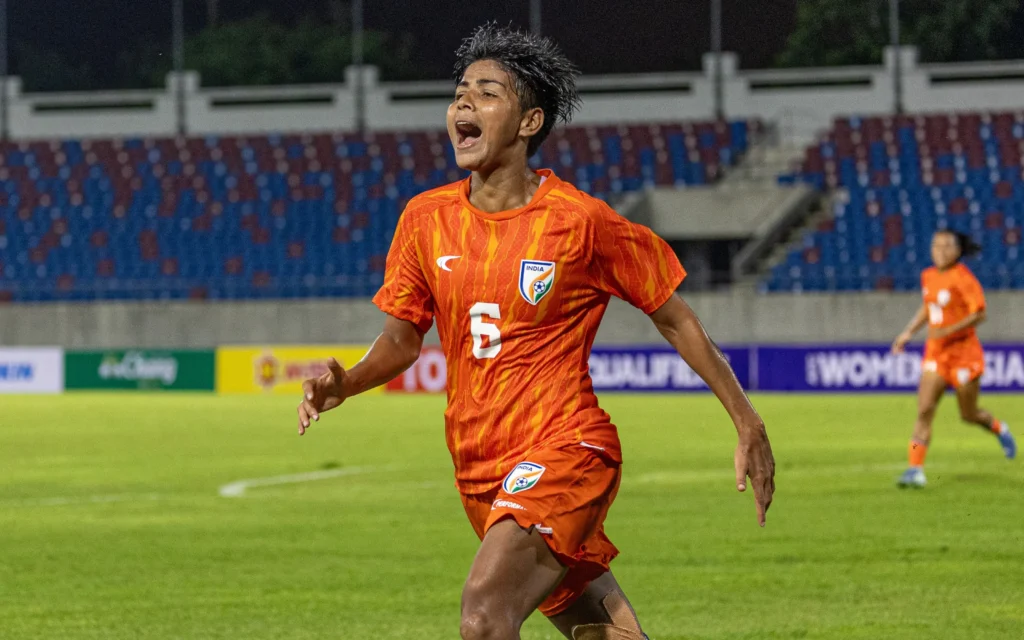
A global stage for Indian football
In Australia, Sangita will not be the only Indian player to keep an eye out for with a talented squad that includes the likes of Manisha Kalyan and Aveka Singh; the latter still uncapped at the senior level but plying her trade at Næstved HG in Denmark’s second division.
Manisha, on the other hand, is Indian football’s poster girl, having been the first Indian to play in the UEFA Women’s Champions League and recently scored her first goal for her new club Alianza Lima in Peru.
Crispin feels that the upcoming AFC Women’s Asian Cup in Australia is a great opportunity for many of this talented crop of Indian footballers to attract attention from abroad, which could in turn hugely benefit Indian football.
“The AFC Women’s Asian Cup will be a huge platform for all the players, as scouts from major Asian and European countries will have an eye on them,” he said.
“If we can have maybe another six or seven players going outside India and playing in Europe, they can share their learning experience when they come back to the national team camp with our junior players as well.”
And so, in just over a week, the Indian girls brace themselves for the biggest matches in their careers when their AFC Women’s Asian Cup 2026 adventure begins.
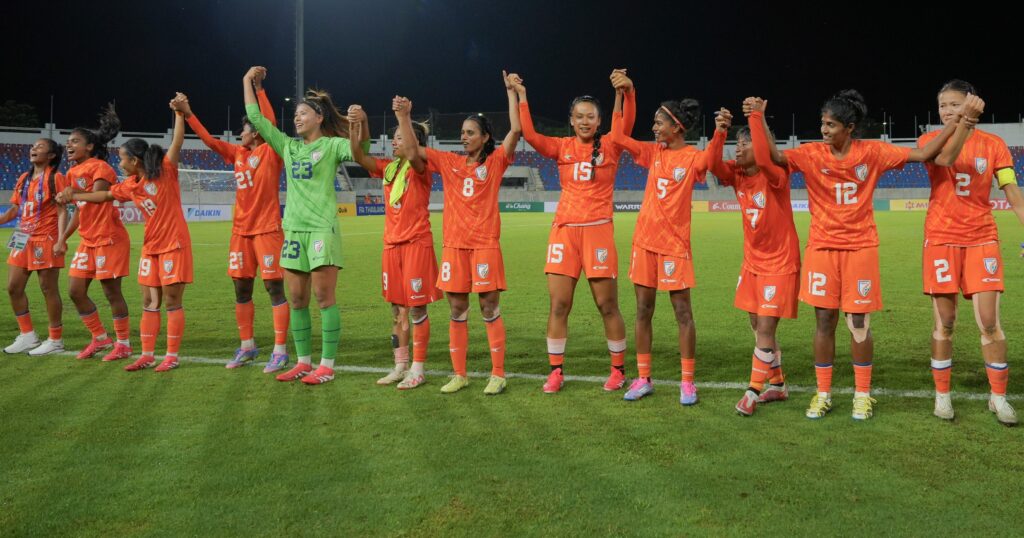
India are placed in Group C, where they will take on Vietnam in their opener on 4 March in Perth, before facing a daunting test against Japan three days later at the same venue. They will then make the trip across to Sydney to face Chinese Taipei in their final group game on 10 March.
“If you want to become the best, you have to play against the best. For me, there is no failure in sports. It’s all about learning and understanding the intensity and physicality that you need to grow as a team,” said Crispin.
The Blue Tigresses are the lowest-ranked team in the group, currently placed 67th in the FIFA Women’s World Ranking but that doesn’t deter them from their objective.
Crispin stressed not giving the rankings too much of an importance and has full confidence in what his girls are capable of on the big stage.
“You can’t judge a team by FIFA ranking. Bangladesh and Nepal are ranked much lower than us, but they’ve still defeated us in the SAFF Women’s Championship. So, it’s about how mentally prepared you are,” he pointed out.
“Obviously, Japan is on a whole different level. But on a given day, teams like Vietnam and Chinese Taipei are beatable. There’s not much of a difference between them and us. If we can show the attitude we had in the Thailand match, with one win and a draw, there would be a realistic chance of us going through to the knockout round.”
Dream It, Do It
The format for the AFC Women’s Asian Cup 2026 means India has a genuine chance of achieving a historic qualification to the FIFA Women’s World Cup 2027, which will be staged in Brazil next year.
In addition to the top two teams from each group, two of the three best third-placed teams will also make it through to the quarter-finals. In the knockout stage, two of the four quarter-final losers will still have the chance to directly make it through to the FIFA Women’s World Cup, with the AFC being allocated six confirmed slots for the global showpiece.
“We are manifesting World Cup qualification. Manifestation helps because then you work towards it. It could be the turning point for Indian football if the players can qualify for the FIFA Women’s World Cup in Brazil,” said an optimistic Crispin.
In a bid to boost India’s hopes, AIFF has appointed Amelia Valverde as the coach of the team with the Costa Rican masterminding her native land’s only two appearances in the FIFA Women’s World Cup in 2015 and 2023.
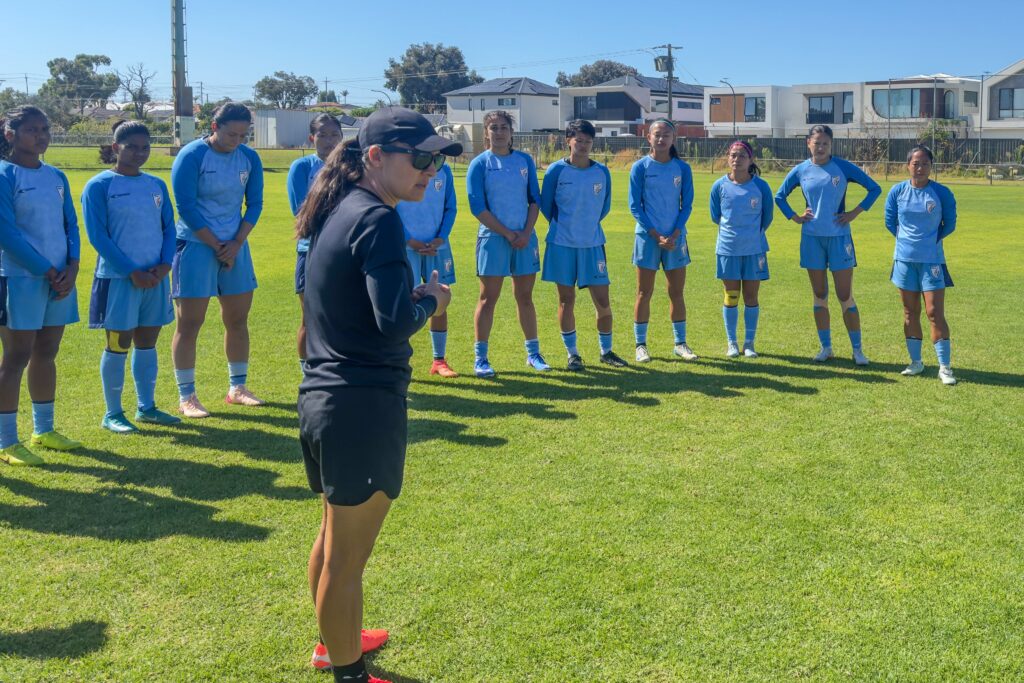
Since Valverde’s appointment last month, there has been a lot to be optimistic about as India have defeated Germany’s Hertha Berlin 1-0 and drew 0-0 against Spartak Moscow of Russia in their preparatory camp in Turkiye.
The Blue Tigresses then became the first team to arrive Down Under as they aim to acclimatise to the weather conditions and put the final touches to their preparations before the battle begins.
“The most important thing for me is self-belief, which we lacked in the past. The message to the players is always to believe in themselves,” said Crispin, who remains a crucial part of the coaching staff.
“The sky is the limit. Look at the sky now and aim for the FIFA World Cup. There is a door now; we just have to find a key to open the door.”
Listen to From Dreams to Goals as we discuss the big issues ahead of kick-off of the AFC Women’s Asian Cup