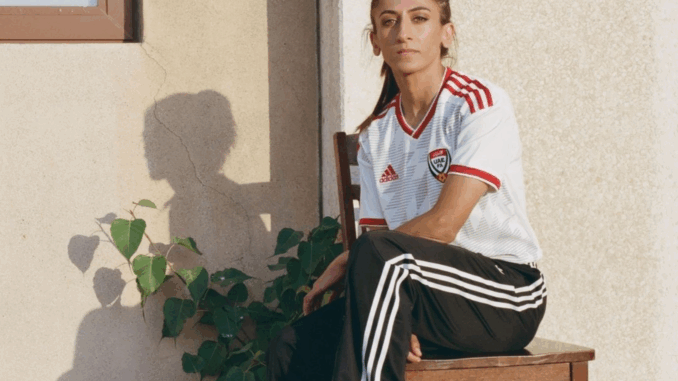
“My real journey began when I was told, ‘Football’s not for girls’,” said Areej Al Hammadi, the United Arab Emirates’ (UAE) Women’s National Team’s (WNT) star midfielder.
“Like most kids, if you tell me I can’t have something, I’ll go after it harder.”
But even that determined little girl could never have imagined that she’d be wearing her national team’s jersey one day.
Growing up in Sharjah, the serene, north-easterly neighbour of Dubai, Al Hammadi had no access to youth academies or girls football leagues. She started out with “a ball and no instructions”, relying on casual kickabouts with her brothers and cousins to develop her raw skills.
Her university days, spent at American University Dubai, finally opened the door to competitive play. Rising to prominence as the captain of her university team during the 2008-2009 seasons, her passion and love of the game rendered her a standout performer.
“Football felt natural. I loved the competition, the intensity, the skill, and the sense of freedom and belonging that came with it.”
Describing herself as a “creative by day, footballer by night”, Al Hammadi has spent the last 15 years since graduation finely balancing the pursuit of her visual communications career with membership of various football leagues in Dubai and Abu Dhabi, her first cap proudly won in 2015 with her appearance at the Aphrodite Cup in Cyprus.
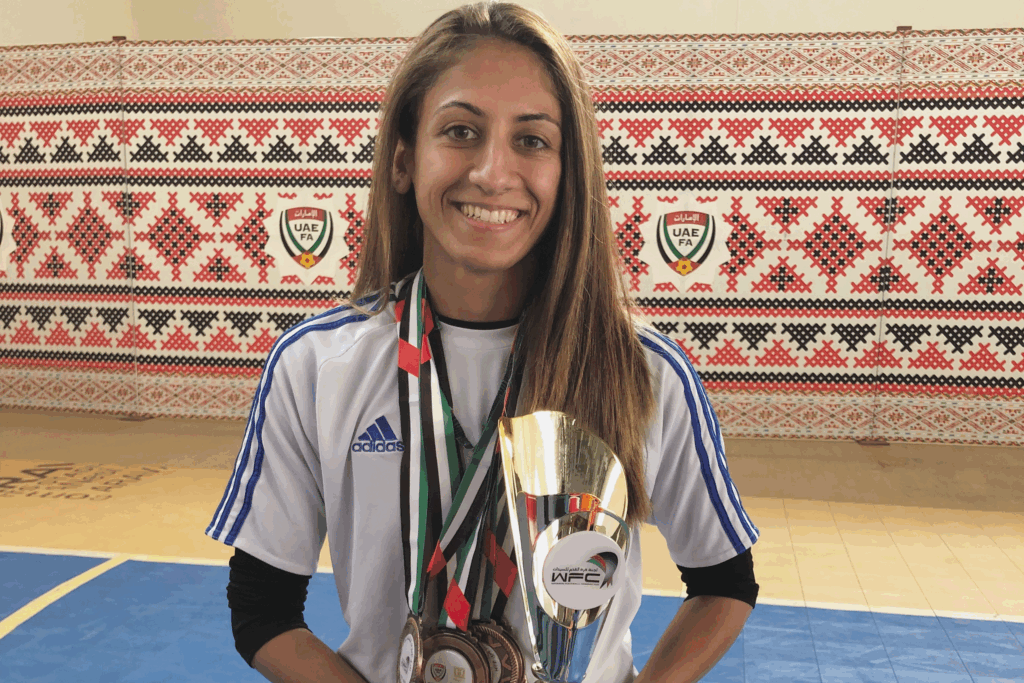
“There were times where I questioned everything,” Al Hammadi said, reflecting on the hard work and sacrifices it took to succeed during this period.
“Late training after full-time work, missing family events, sacrificing time in general — but I kept going because I couldn’t picture life without football in it.”
Now, after a decade of representing her country professionally, Al Hammadi feels more energised than ever.
The arrival of Vera Pauw, the famed Dutch coach who has taken women’s football to new heights in several countries across the globe, is one of the biggest reasons for Al Hammadi’s optimism. Moreover, she believes the upcoming campaign could be the start of a new era of growth for women’s football across her country.
“Vera brings not just experience but belief,” Al Hammadi said. “She challenges us and has brought a new structure that’s rooted in discipline and identity. There’s a strong focus on understanding our roles and raising our standards.
“She’s helping us see ourselves as serious contenders, not just participants.”
Pauw famously guided Ireland to the 2023 FIFA Women’s World Cup and while she’s approaching the Women’s Asian Cup qualifiers with her usual tactical attention to detail, she sees that campaign as part of a much bigger journey.
With the support of a passionate local team with diverse expertise, she wants to build better talent development structures and capture the imagination of young girls around the UAE.
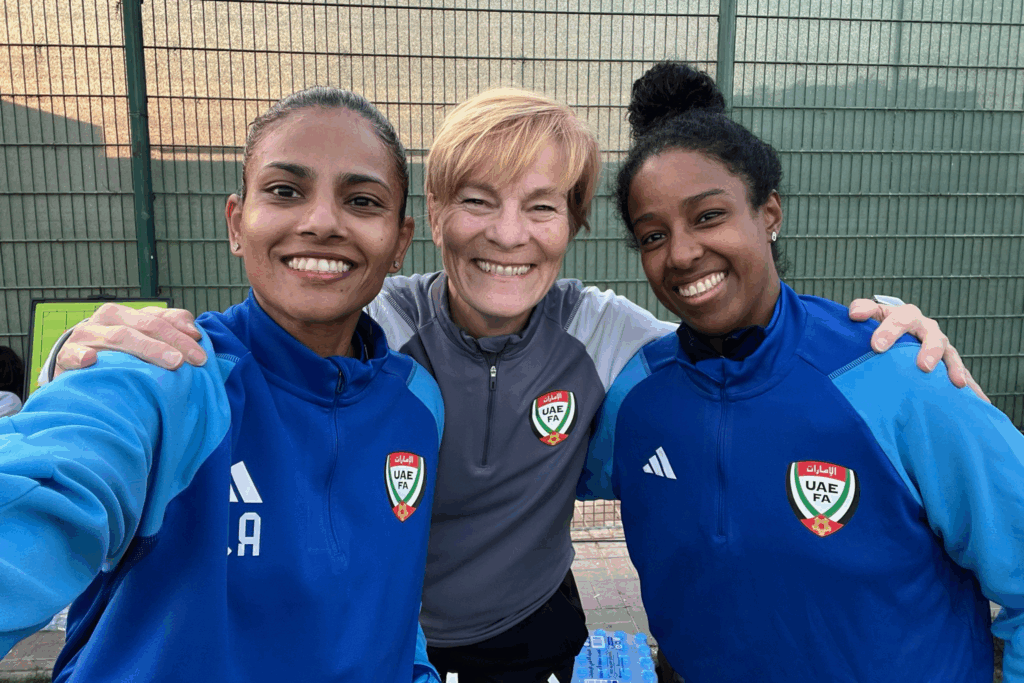
“There’s so much to achieve here, to create space for girls to experience their own strength” Pauw said.
“For us, the qualification campaign is a tool to grow the game and become visible — so young players, kids, can aspire to something.”
Regardless of the outcome, Pauw said that their contests with Vietnam, Guam and the Madlives are a vital opportunity for promising talent to gain the international experience they’ve been missing.
“It’s about football capacity — how often can we make the right decision faster than the opponent?
“The players are excited… there’s some very good players [in the squad] and a few [talented] players that need to [grow] into international football. We will do our best [in these games] and we’ll see where we end up.”
Women’s football took a huge hit in the UAE during the Covid pandemic and in many ways, it still needs time to recover.
“After Covid, women’s football collapsed. We had a professional league, all players were paid. Then everything disappeared. It had to be built from scratch,” Pauw explained.
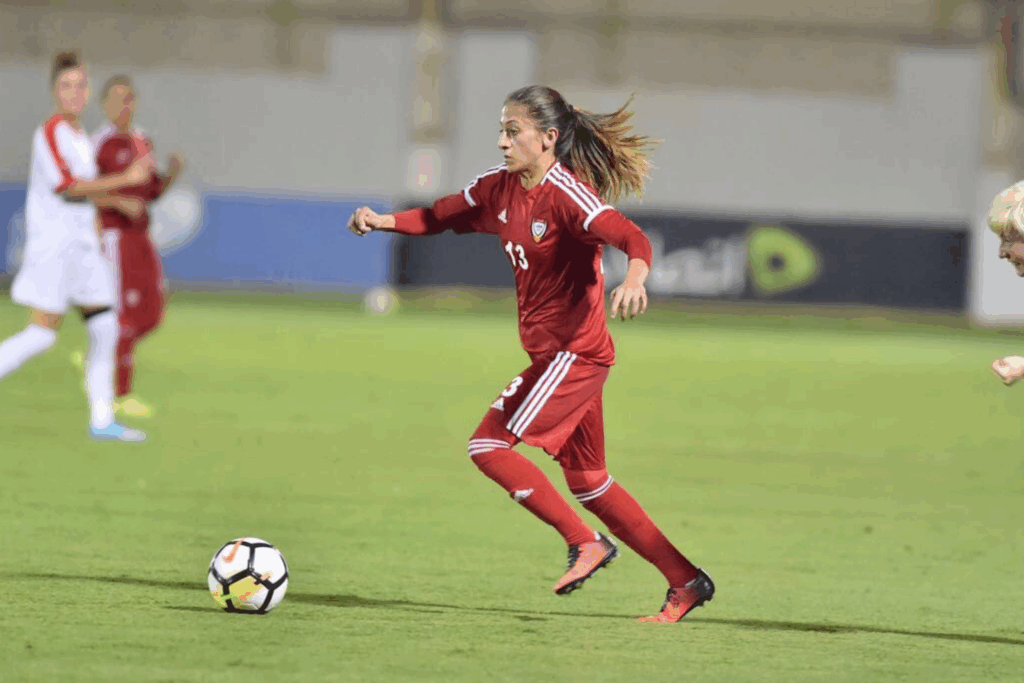
“There is a generation gap — a few diehards from before Covid, then a big hole, and now very young players.”
Pauw has been impressed by the swift rebuilding of women’s leagues at every level: senior, U17, U15, U13, grassroots.
“That’s thanks to the efforts of Amal Hasan Abu Shallakh and Alkabi Abdulrazzaq from the UAE FA Board and Management, and Houriya Al-Taheri and Noura Almazrouie, who are putting excellent foundations in place for both seniors and youth development.”
She believes strongly in keeping this local expertise right by her side, crediting her cultural sensitivity to studying Hofstede’s cultural dimensions, a theoretical framework emphasising appreciation of the unique parameters of each country’s values and communication styles.
“I don’t [just] bring my own culture. I build from the local culture and try to work from there… I ask ‘please keep me on the right path’, because it is never easy to see and feel the strengths and sensitivities of another culture,” Pauw said.
“Many coaches bring their whole staff. Then when they leave, it all collapses. I start from the culture and build from there.”
Ultimately, for women’s football to reach new heights, Pauw believes the team must find a way to have stronger cultural and mainstream impact.
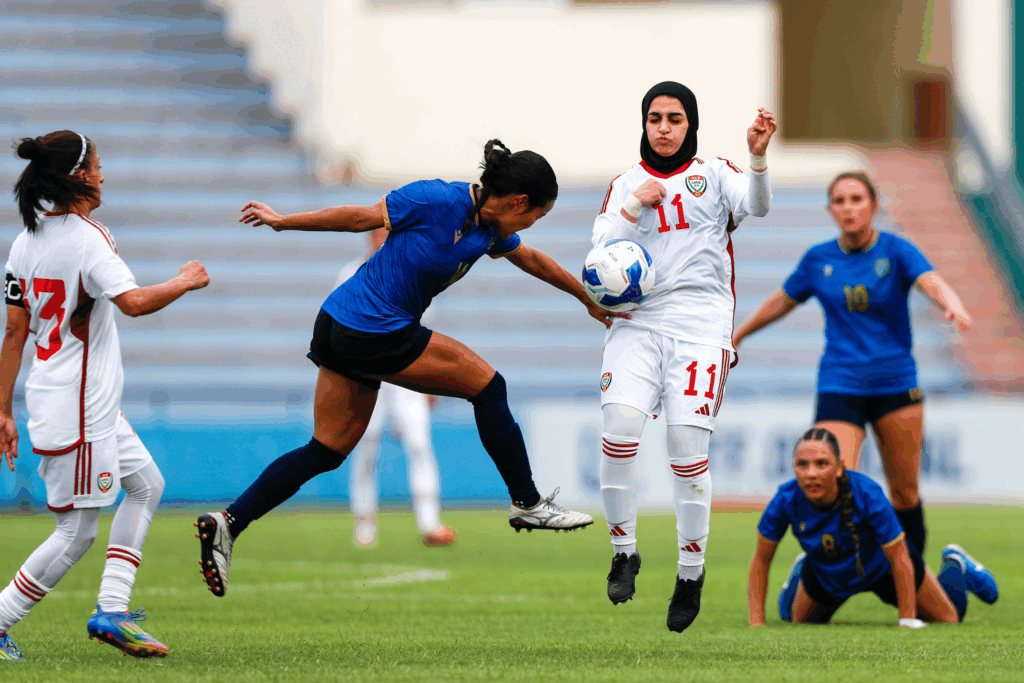
“We need to become visible. How can a young girl choose football if she never sees it?”
“Some players didn’t know who Sam Kerr is — not from lack of interest, but because it’s not on their screens… the UAE will become a strength in West Asia, but it takes years.
“These players need to become heroines in the country. That’s the most important thing right now.”
The signs are positive so far, with Al Hammadi witnessing significant growth in recent years.
“It’s gone from whispers to real conversations,” she said.
“Ten years ago, saying ‘I play football’ as a woman raised eyebrows. Now you see girls wearing national team kits, joining academies, dreaming of playing abroad.”
Despite some level of stigma remaining, Al Hammadi and her teammates are determined to keep breaking barriers.
“We still see the negative comments on some platforms, and media coverage is better but limited. But the support from families, friends, and those who follow the game closely is growing and that means a lot.”
Abu Dhabi Country Club’s recent run to the quarter-finals of the AFC Women’s Champions League grabbed numerous headlines, putting UAE women’s football sixth in Asia and first in the Arab world at club level. Al Hammadi was a key member of that heroic team.
“If you’d asked me five years ago what my dream was, I would’ve never imagined that we would be in the AFC [Women’s] Champions League. That was surreal.”
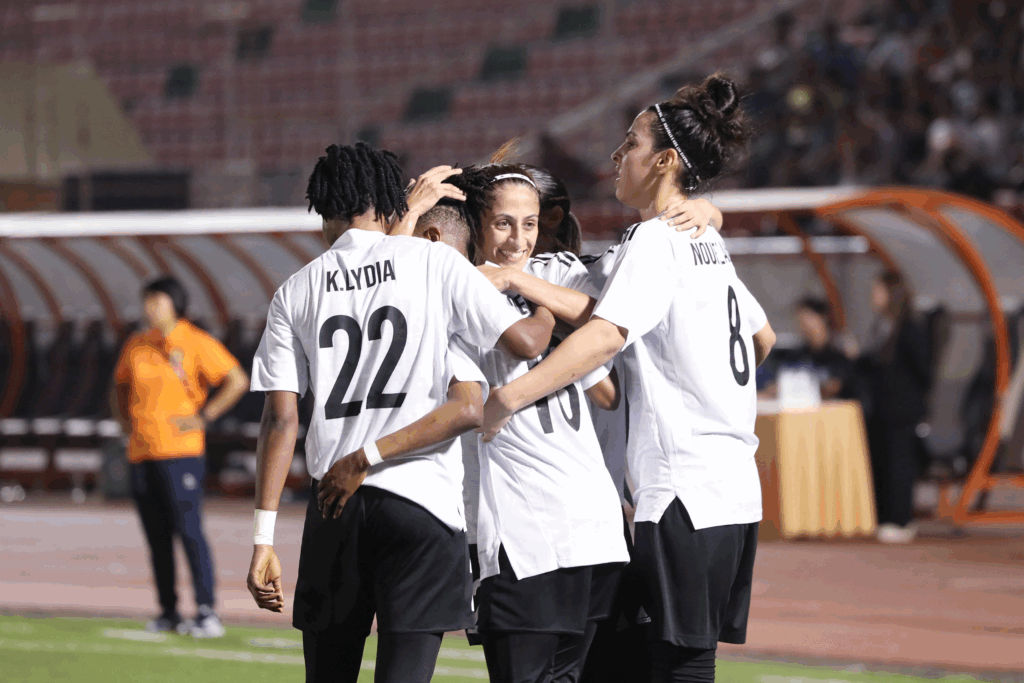
She sees no reason why this success can’t now be replicated by the national team.
“This squad has grit and potential. There’s hunger, there’s unity, and that’s a great environment.”
“We still have a long way to go, and we’re behind where we should be, but even with all the challenges, we’ve built a team that can compete and shake things up.”
As Al Hammadi looks ahead to the qualifiers and beyond, she feels this campaign is about so much more than one tournament.
To her, it is the beginning of a long but rewarding road, paving the way forward so that elite athleticism is a normalised career pathway for Emirati girls.
“I want to see a fully professional league, packed stadiums, sustainable clubs, and Emirati players signing pro contracts and competing internationally.
“Beyond that, I want to see decision-makers and sponsors understand the value of women’s football and stop seeing it as a risk.
“It should be normal. It should be supported, celebrated, and given the space to grow.”
Listen to From Dreams to Goals with Gina Bagnulo and Anirudh Nair