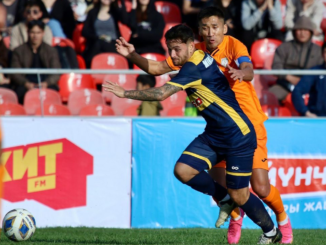

Approaching the half way mark of the League Stage, the shape of this year’s AFC Champions League Elite is slowly starting to take effect.
There are some familiar patterns emerging: Saudi clubs continue to dominate in the West, and despite Sanfrecce Hiroshima’s loss on the road to Ulsan this week, Japanese clubs still look best placed to challenge from the East.
But there are other trends and narratives emerging too, and here we look at four talking points from Matchday Three of this year’s competition.
Qatari giants continue to struggle
Amid their respective domestic struggles, six points off the pace a quarter of the way into the season, the continental theatre was meant to provide a reprieve for both Al Sadd and Al Duhail, the two giants of the Qatar Stars League.
Between them they’ve won all but one of the past 15 league titles and together provide the bulk of the Qatar national team that just qualified for next year’s FIFA World Cup. In Al Sadd’s case, they also have one of the best players on the continent in Akram Afif.
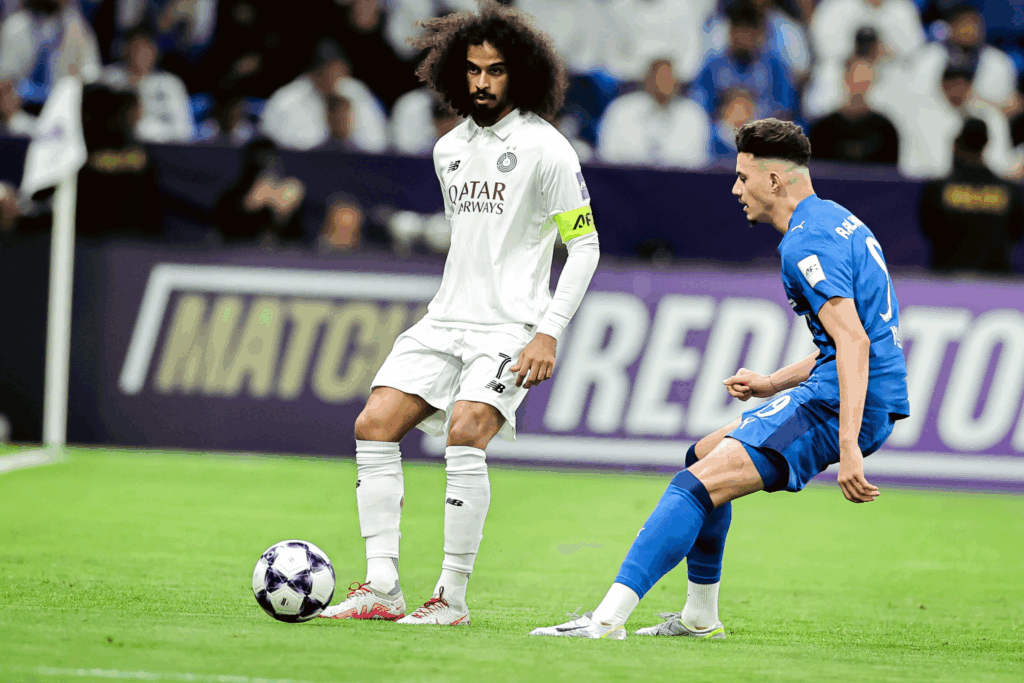
It wasn’t that long ago that Al Sadd made back-to-back semi-finals (2018 and 2019), while they were quarter-finalists just last season. Al Duhail, meanwhile, were semi-finalists as recently as 2022. These are sides that should be competing at the pointy end of this competition each and every year.
If anyone was going to provide a challenge to the dominance of the Saudi clubs, particularly in the western zone, it was expected that the Qatari duo would be two who could do it. And yet, after three games, both are still winless and sitting outside the Top 8 that advance to the knockout rounds.
Al Duhail, to be fair, have played both Al Hilal and Al Ahli in their opening three games, the top two as it stands in the western zone. But that is the challenge of the new League Stage format, there are no easy games. Every game is a designed to be a challenge and as it stands, it’s one that both Al Sadd and Al Duhail are unable to rise to.
All is not well at Sharjah
Cast your mind back just a few months and Sharjah were toasting continental success in the form of the AFC Champions League Two.
It might ‘only’ have been the second-tier continental competition, but it was continental silverware nonetheless and gave them an incredible springboard into this year’s competition.
But a change of coach, necessitated by Cosmin Olariou’s secondment to the national team, has failed to keep the momentum going. Miloš Milojević was a shrewd appointment given his recent success with Al Wasl, but for whatever reason the Serbian is struggling to implement his ideas 30km north in Sharjah.

They’ve won just one game in the ACL Elite this season, a 4-3 classic against Al Gharafa, scoring twice in second half stoppage time to turn a 2-3 deficit into a 4-3 win. But not even the euphoria of that victory has been able to improve their fortunes.
Domestically they’re already nine points off the pace after just six games, sitting a lowly tenth and closer to the relegation zone than the top three and face the daunting prospect of Shabab Al Ahli this week, who they battled with so fiercely for silverware on multiple fronts last season.
Despite only being in charge for a matter of months, in an interview with AD Sports TV after their 0-5 hammering at the hands of Iran’s Tractor, Milojević looked bereft of ideas, unable to explain his side’s poor run of form and almost resigned to his fate.
“Of course it’s a problem to lose the game, but (also) how we lose,” he said.
“The game was closer to 7-0 or 8-0 than 5-1, so for me the most painful I feel for me from the first day we didn’t improve at all, we leak so many goals in our net and we have so many difficulties to create against an organised defence.
“I’m not saying it’s a problem to lose, it’s a problem to give up. And we gave up. We gave up after 2-0 when there was still 75-80 minutes to go, and this is something that is unacceptable. This is not just the case today, this is a cumulative process.
He continued: “There is not a good infection in the team, we choose the games (when we play well), we choose when to start the game (well) and we are not fair to ourselves, to our supporters or anyone.
“I’m worried that we’re not improving. Everyday I am screaming and trying to show them the clips, and personally they’re a really good group but somehow they don’t enjoy to play football. It’s a better atmosphere in training than in the game, and this is something I am worried about.
“I am responsible because I am planning the trainings, choosing the teams, I cannot blame anyone else. Like I said to the players, somehow my ambition and my energy didn’t infect them. Not an easy moment for us.”
Domestic complications
One of the challenges of competing in continental competition, especially in a continent as vast as Asia where travel for away games can be exhausting, is how to juggle the balance between domestic and continental at a time of the season when silverware is being decided.
With the changing of the calendar for the AFC’s club competitions, those concerns have flipped from west to east, with leagues in Japan, Korea and China now reaching their conclusion through the early rounds of the League Stage.
Rotating players between domestic and continental competitions is nothing new and is absolutely necessary when factoring in the travel required, but as some clubs target domestic silverware, the extent of those changes has a material impact on not just the quality of the games, but the outcome.
Take Vissel Kobe as an example, a club chasing a record equalling third straight J.League title. Only the mighty Kashima Antlers side of 2007-09 has managed a hattrick of titles, and ironically it is the Ibaraki-based side that is threatening to derail Kobe’s attempt to achieve the same.
When looking at how Takayuki Yoshida has rotated his side, it is clear the focus is solely on securing that third consecutive title. It might be a long shot, sitting five points behind Kashima with only four games remaining, but he won’t die trying.
In the past two games, against Melbourne City and Gangwon, he has made ten changes to his side from the preceding J.League game, playing what can only be referred to as ‘B’ or even ‘C’ teams.
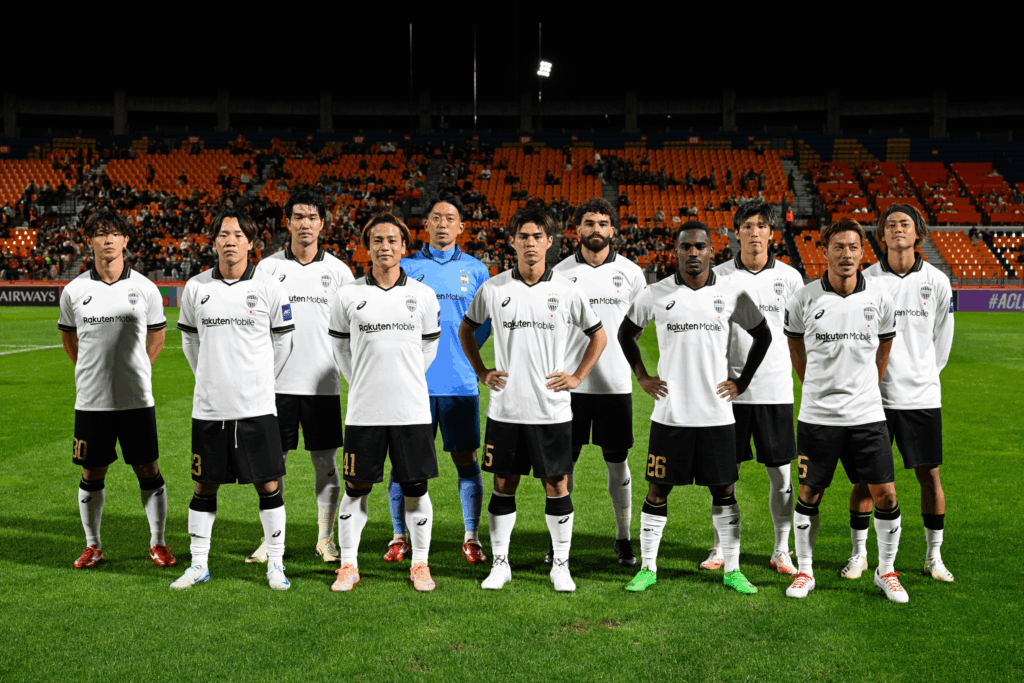
While they escaped with the three points against Melbourne City thanks to a 94th minute winner, they weren’t so lucky against Gangwon, who only made two changes and started the game largely at full strength and raced to a 3-0 at half-time.
As Yoshida introduced more of his regulars in the second half, Kobe fought their way back to 3-3 before a late winner sealed the deal for Gangwon.
It’s not just the Japanese side either.
Chengdu, Shanghai Port and Shanghai Shenhua are locked in a fierce three-way battle for the Chinese Super League silverware, with just three points separating the three sides with three games remaining.
Shanghai Port lead the way, two points clear of Chengdu with Shenhua a further point back and Port coach Kevin Muscat has made it a habit to rotate his side in all three games, making seven changes for MD1, six for MD2 and seven again for their most recent clash at home against Machida Zelvia.
While it’s working for them domestically, in Asia it is hurting with Port the only side in the East Zone yet to register a victory after three matchdays.
Chengdu made eight changes for their clash this week, losing 0-2 at home to Malaysia’s JDT, as they also look to keep players fresh for their title charge.
You can’t fault the coaches for their choices, but what it does do is materially alter the competitive landscape and in a League Stage where, come the end, progression can be decided by the outcome of other matches, there is a flow on effect that will play out over the final matchdays.
Melbourne City end Australian drought
They left it late, but Melbourne City finally have their first win in this year’s AFC Champions League Elite thanks to a deft finish from young gun Max Caputo.

It wasn’t always pretty, and barely anyone turned up to watch, a continued problem for Australian clubs in Asia, but none of that will matter to Aurelio Vidmar as he looks to take Melbourne City into the knockout rounds for the first time in their history.
It was the first time in 14 matches that an Australian club tasted victory in Asia’s top club competition, a staggeringly bad record for any nation, let alone one like Australia that considers itself one of Asia’s elite.
Ironically, the last win for an Australian side was also Melbourne City and also came against Buriram United, almost two years ago exactly on 25 October 2023.
City failed to win any of their remaining three games of that campaign, while Central Coast went without a win in last season’s League Stage and City, again, went 0-2 to start this campaign against Sanfrecce Hiroshima and Vissel Kobe.
It was only just over a decade ago that an Australian side won this competition, and if A-League clubs are to harbour ambitions of going deep, the rot needed to end and maybe, just maybe, that began with Melbourne City’s come-from-behind victory this week.