Al Sadd face Sharjah with pressure mounting, but the clash once again offers the chance to turn the tide of a faltering season.
For a team that wears its domestic supremacy as lightly as Al Sadd, the past month has felt curiously heavy. Four games without a win is not a crisis, not quite, but it is enough to provoke unease.
The eighteen-time Qatari champions have begun to resemble something altogether more vulnerable: a group of lavishly talented individuals, weighed down by expectation, searching for rhythm.
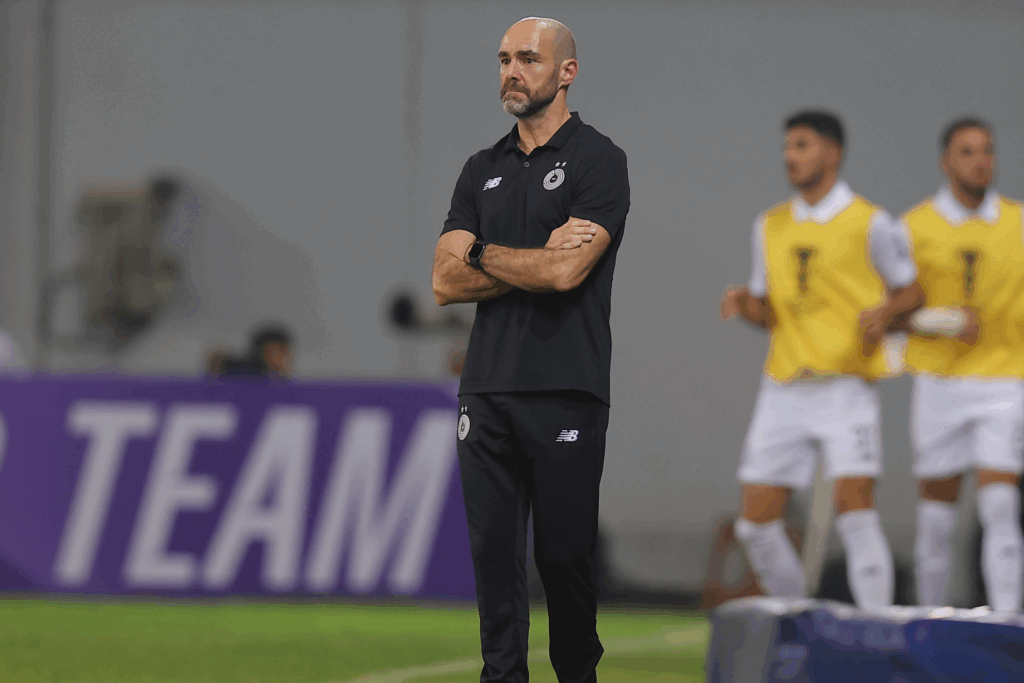
It is against that backdrop that Felix Sanchez’s side will face the UAE’s Sharjah at home on Tuesday. The AFC Champions League Elite tie is not just a chance to correct the course — and it is highly improbable that one game will bring monumental change — but it will hold more weight for both the club and head coach Sanchez’s approach.
After all, the story was not too different a year ago, when Al Sadd fed off the continental results to rebuild and ultimately plot a comeback to win the league after a rather abysmal start.
A hard-fought 2-0 win against Esteghlal at the Jassim bin Hamad Stadium on the second matchday retrospectively proved to be a flashpoint that set the side on an 11-game unbeaten run in all competitions.
That momentum carried them through the spring. The difference this time is that the trick feels harder to repeat, if only because the margin for error is smaller, and the competition is sharper.
Last season, Al Sadd made it to the last eight of the continental competition for the first time in four years, in addition to putting in some gritty performances against mighty Saudi clubs.
However, it was a tricky affair as Sanchez himself admitted, as the side had to juggle through player registration issues. Only Asia-bound clubs were granted late permission to exceed the league’s foreign player quota of seven, weeks into the season.
Standout performers in ACL Elite, Morocco national team captain Romain Saiss and Algerian full-back Youcef Atal, were not registered to play in the domestic league for a sizeable chunk of the season.
“It is difficult, of course, since players can lack rhythm when it is like that. We need to manage the situation for us to be in a good position in the league and the Champions League,” Sanchez said in February.
Following the extension of the foreign-player quota to ten and Al Sadd’s rather busy transfer window, the expectations, hence, are high for the 2011 winners in what will be the Spaniard’s second season in charge.
And yet, in practice, abundance has not translated into fluency. Sanchez, methodical and meticulous, finds himself with a managerial headache increasingly common with heavyweight sides: how to blend overlapping talents into a structure that is both coherent and ruthless.

The temptation to shoehorn them all in, to overwhelm opponents with sheer firepower, is strong. The reality is that Al Sadd too often look bloated rather than balanced.
While the acquisition of Agustin Soria and Pau Prim — young midfielders with high ceiling — as well as the experienced Roberto Firmino from Saudi Arabia’s Al Ahli has instilled that added firepower, the recent weeks’ pattern is illustrative.
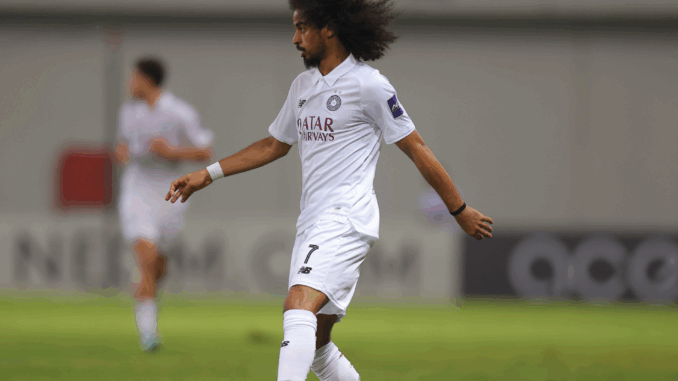
Possession is sterile; the ball passed sideways, recycled, waiting for someone to impose direction. The forwards, each accustomed to being the protagonist, sometimes drift into the same spaces, eroding width and reducing options. The talismanic Akram Afif, by his own lofty standards, has not stood out.
Against more disciplined opponents, Al Sadd’s threat is neutered, their pressing blunted. In a battle touted as the battle of former Qatar national team coaches, Bartolome ‘Tintin’ Marquez Lopez put on a convincing plan to hand Qatar SC a 3-2 win on the opening day.
Sharjah, on the back of an astonishing comeback win against Al Gharafa in the first matchday, could pose a similarly awkward test on Tuesday.

The clash at home, hence, is as much about identity as outcome for both Sanchez and Al Sadd.
Ever so revered for orchestrating Qatar’s 2019 AFC Asian Cup triumph, Sanchez’s coaching approach is often associated with risk-aversion, control, and the idea that collective understanding can outstrip individual flair. That may mean leaving a marquee signing on the bench on Tuesday to instil balance.
For Al Sadd, this clash — regardless of the outcome — will again be seen as a paradox that has stuck with them since 2011: almost untouchable at home, but always judged abroad. On the back of their fans’ expectations, a win here could ease pressure, but a loss would invite deeper interpretations.
Hence, for Sanchez and his charges, the Sharjah clash may not decide their season. But it could decide its shape and serve as a tipping point.
Listen to Episode 255 of The Asian Game Podcast