
The Future is Asia has been the slogan of the Asian Football Confederation (AFC) from time immemorial. That future never does seem to arrive, though.
For the head honchos in Kuala Lumpur the future had arrived when a rebranding and overhaul for the continental competitions was announced. Much like many of their other innovations rolled out in Asia, the idea to reintroduce a third tier continental competition was taken directly from Europe. When the 2019 AFC Asian Cup was expanded to 24 teams in 2014 it followed UEFA’s decision to expand Euro 2016 to the same number.
Perhaps the only surprise over the past decades is that an AFC Nations League has yet to be inaugurated.
Now, change can be good and imitation is not always bad but rarely has the question been asked as to why the recent reformatting has taken place.
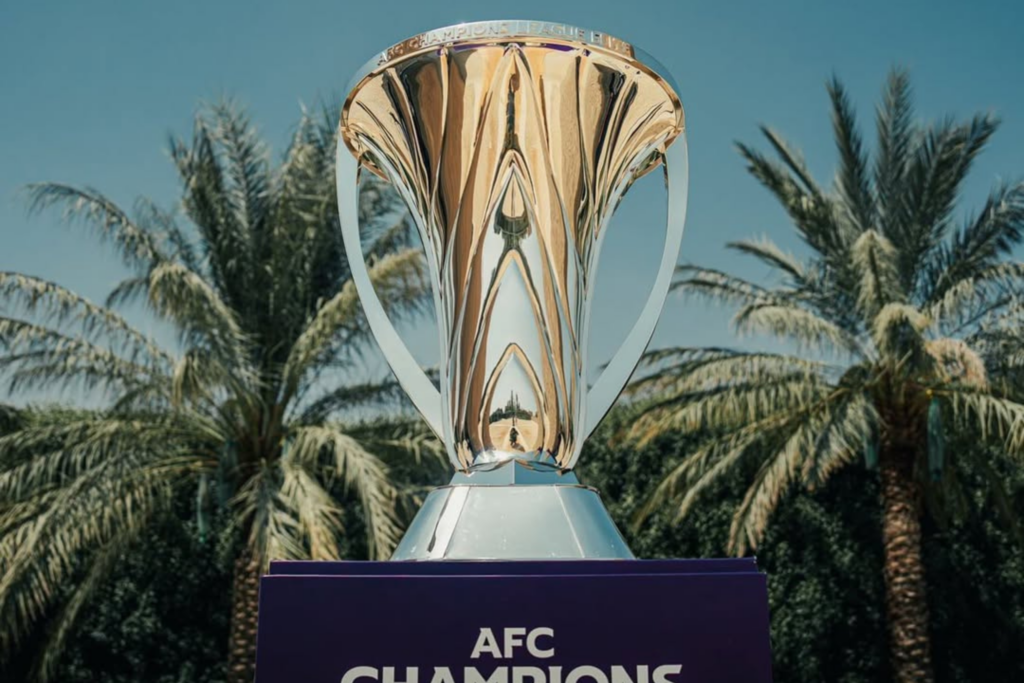
Even the rebrand is confusing. The AFC Champions League, AFC Cup, and President’s Cup were completely fine as names. Some marketing experts would most likely make the argument that a rebrand was necessary but AFC Champions League Elite is unnecessary verbose.
AFC Champions League Two just stresses to viewers, sponsors, and participants that they are playing a second tier competition. Even the newly created AFC Challenge League could easily be confused with the now defunct Challenge Cup that served as an Asian Cup qualifying pathway for Asia’s developing associations for the 2011 and 2014 Asian Cups.
Moreover, none of these changes have done anything to raise the level of football or interest amongst the fans.
The first step is to recognise that there is a problem. Certain aspects of that problem can be solved while others are firmly grounded in iron-clad financial realities. There exists no magic wand that will make Asian competitions rival its European counterparts. The AFC has to recognise that you cannot buy a legacy – multiple generations in Asia have grown up with UEFA Champions League nights and early mornings being appointment viewing. Interest in the European Championships also outstrips that of the Asian Cup.
If Asia cannot compete with Europe at the same game, then maybe they should consider changing the game.
National Team Competitions
If there is one thing the AFC can take credit for is they have finally, at senior level at least, fixed the qualifying system for the FIFA World Cup and AFC Asian Cup. Would it be better if all 46 nations could compete in Round 2 instead of just 36? Yes.
That said, those of us who lived through the qualifying format for the 2010 and 2014 FIFA World Cups, with byes for established powers and two preliminary stages for everyone else, will gladly withhold criticism. Shutting out half of Asia from Asian Cup qualifying proper for the 2011 and 2015 edition stymied development and inhibited competition.
In spite of the improvements there is still something lacking and that is the number of competitive fixtures being contested by Asian teams in comparison to their European, American, and African counterparts.
Most would advocate for the creation of an AFC Nations League but that overlooks the presence of competitive tournaments that are not treated as such. Some competitions are much loved; the Arabian Gulf Cup and the AFF Insert Sponsor Here Cup come to mind. Others are much maligned such as the sub confederation championships for East and West Asia.
No matter the tournament all the matches are treated the same by the FIFA Ranking: they are nothing more than friendlies. The UEFA and CONCACAF Nations League? Those are given the same weight as a qualifying match.
Africa and South America do not have a Nations League but in Africa the teams are constantly playing qualifiers for the biennial AFCON tournament and the World Cup. In South America, there are a minimum of 18 World Cup qualifiers for each team.
The AFC should lobby to get these tournaments the designation they deserve. This will help nations big and small improve their FIFA ranking. Consider that Australia and South Korea – World Cup perennials that advanced to the Round of 16 in 2022 – could be leapfrogged by Panama into Pot 2 for the 2026 FIFA World Cup draw.
Youth Development
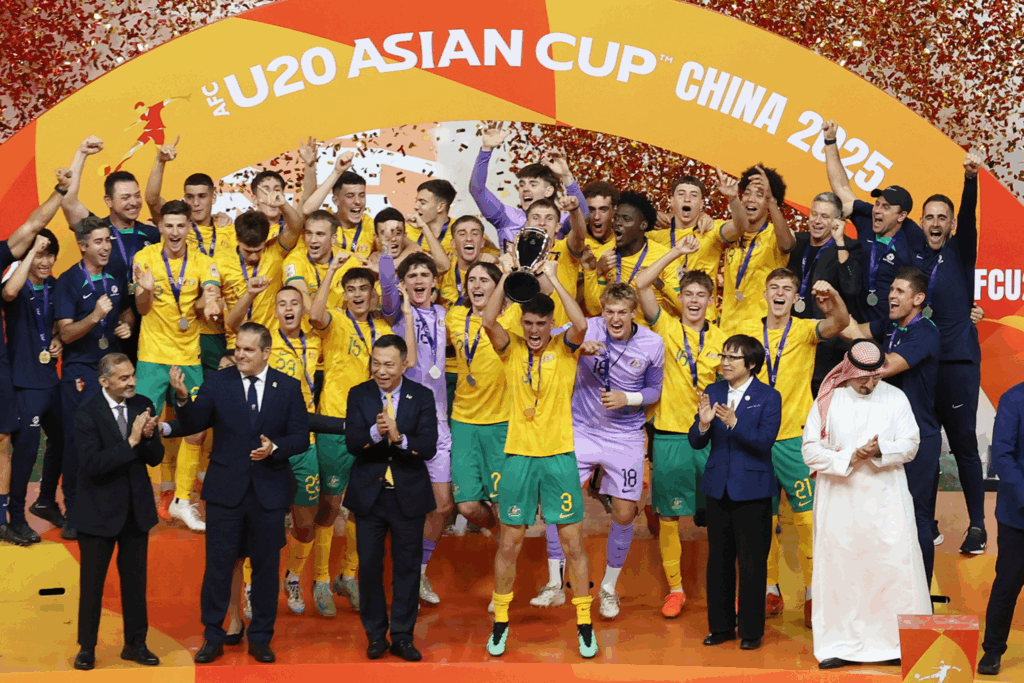
There is a simple axiom for youth development: the more competitive matches a young footballer plays, the more likely they are to improve. A cursory look at how qualification is designed for the U17, U20, and U23 AFC Asian Cups you would be forgiven for thinking the goal was to limit the amount of games.
Fail to qualify for the finals and you might only get two or three games in the space of a week every two years. Group winners and the four best runners up advance but the way those runners up are selected can be controversial.
Take, for example, Palestine who beat Bahrain and Pakistan and lost to Japan 1-0 in their attempt to qualify for the 2024 U23 Asian Cup. That sole loss – to a team that topped its group at Paris 2024 – eliminated Al-Fida’i.
Compare that with the U17 and U19 UEFA Championships that are contested every year. Qualification for the U21 UEFA Championship is a gauntlet that spans 10 games over 16 months.
The argument against implementing something similar in Asia is the travel required but what if the U17 and U20 tournaments were held every year whilst retaining the current format?
For the U23 tournament the qualifying format can mirror that of the joint qualifiers every four years while retaining the current format for the cycle when the tournament serves as Olympic qualifiers. This would necessitate doing away with the flawed seeding system that seeds based on performance in the last U23 Championship. It would be one draw that serves as qualification for both.
It would also mean ten U23 teams suffer an early exit after just two games.
The U23 and senior team travelling together to destinations across Asia would generate cost savings and also expose promising players to the rigours of top class international football.
At club level something needs to be done to encourage player movement between leagues. Most Asian leagues operate with only a handful of roster spots for foreign players. A reserved spot for an Asian player was in vogue a decade ago but is quickly disappearing across the continent.
European leagues operated in a similar fashion until the Bosman ruling in 1995. After that landmark case European footballers were free to leave their clubs at the end of their contract and seek employment in a dozen other countries (that number is now up to 30). European teams look for talent close to home and they even are willing to scout countries outside the European Economic Area. Take for example, the case of Khvicha Kvaratskhelia who transferred from the Georgian League to the third placed team in Serie A at the age of 21.
Could anyone imagine Tajikistan’s best footballer transferring to Al-Nassr in 2025?
There are no simple solutions in this area as the AFC simply does not have the jurisdiction to affect change. That said, serious steps need to be taken to create a beneficial circular football economy when it comes to player trading.
Club Competitions
If there is one element that should be copied from UEFA it is the idea that every league champion should enter the Champions League. That inclusive policy generates interest in the competition across the continent while also dispersing revenue that can help smaller clubs and leagues develop.

The AFC Champions League Elite (ACLE) takes a very different approach, drawing clubs from just 12 nations; only one quarter of the countries in Asia. Those same 12 nations also send teams to participate in the AFC Champions League Two alongside clubs from another 12 nations. This leave the rest of the continent stuck in the Challenge League.
The moats around elite competitions are not even the crux of the problem, per se. It is the format which fails to produce compelling football on a regular basis. The scheduling also leaves a lot to be desired. Midweek football in Europe is possible because most of the continent’s clubs need only a two or three-hour flight to reach each other. That is not the case in Asia even with the competitions split between East and West.
So what can be done?
Any rejigged competition needs to address the fact that travel is a logistical and financial nightmare for the AFC and the clubs involved. It must also look at the swathes of empty seats as an indictment of the product that has been put forth to the general public. If fans don’t watch the games, sponsors will be hard to come by and TV rights deals will never grow. That is the cold hard economic reality.
My proposal is simple: do away with third tier and second tier competitions and create something new, while also introducing a inclusive more preliminary system for the ACLE.
In place of the discarded tournaments a straight knockout tournament should be introduced featuring 64, or even 128, teams from across the continent. Fans love knockout football – so why not give them what they want?

If the AFC needs any evidence that this would be a roaring success they just need to look at the world of Basketball. College basketball in North America is nowhere near the level of the NBA; the gap between the two is 1000-fold the gap between Asian and European football. Despite this, the collegiate March Madness – featuring 64 teams in a win or go home knockout tournament is wildly popular. The reason for its popularity? Precisely because it is in the antithesis of the bloated NBA 82-game regular season.
The way the tournament is organised could also be an inspiration for the AFC with four regions playing host to one section of the bracket with the semi-finals and final being held in a predetermined neutral location.
Hosting the tournament in four cities and the semi-final/final in a fifth would reduce the travel burden on fans and keep costs for participating teams down. The tournament’s novelty would attract new fans to Asian Football – especially should an underdog go on a run.
It might not be a silver bullet, but bold action – and not lazy rebranding – is what is needed to herald in the future of Asia.
Listen to Episode 254 of The Asian Game Podcast with Brisbane Roar CEO Kaz Patafta