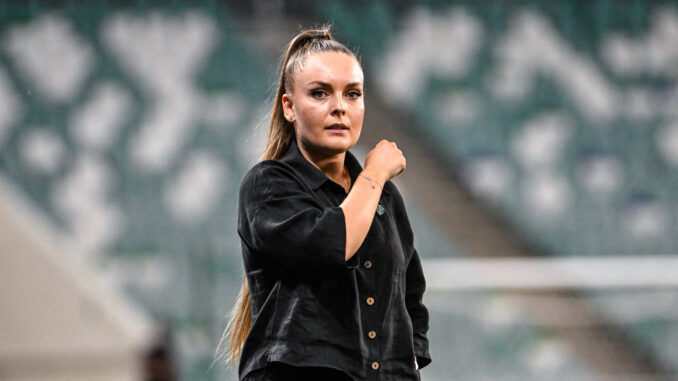
Not only is Kotryna Kulbytė one of the few females actually coaching at this AFC Women’s Asian Cup, she is also younger than some of the players that will feature at the tournament.
Yet for someone so young, the head coach of the Uzbekistan women’s national team, who only just turned 33 last month, is anything but inexperienced.
The Lithuanian native started her coaching journey over a decade ago after giving the game away in a playing capacity, working with academies and the country’s underage women’s national teams.
“I quit playing football very early, and it was honestly (an easy) decision to do it,” she told The Asian Game from Uzbekistan’s pre-tournament training camp in Turkiye.
“I had a huge role model, my father is a coach, not football, but a coach. So I had a huge role model (in him). So all the time I felt like I wanted to be successful, and I felt that maybe in coaching, I can be even more successful than as a player. So why not to try?
“So I started coaching, maybe I was 18 years old. Of course, this coaching was with kids, just helping around everyone. Starting from there, you move to youth academies of boys. After that, you move to youth national teams, first license, second license, top division of women’s football. After you are an assistant of the national team, everything came very naturally.”
Having worked her way up to being an assistant with the senior women’s national team, ever ambitious she had an itching for something more, and that’s when the opportunity with Uzbekistan presented itself.
“I was feeling inside me that I want to move already. It came in one moment that I said, ‘OK, I want to move, I want to move,’” she explained.
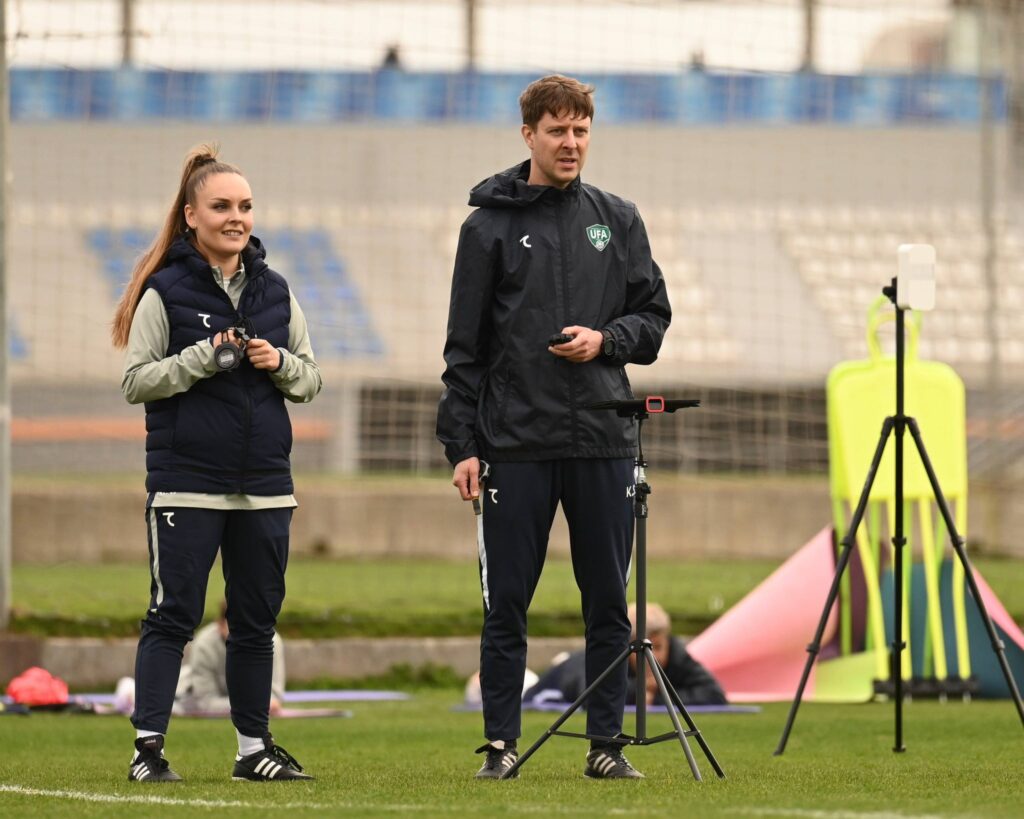
“And when Uzbekistan appeared, they shared their vision, they shared their goal, and they (convinced) me. I said, ‘OK, let’s go, let’s do it’ because I want to be part of something bigger, to build something bigger with them.
So it was not a big decision. I moved fully to Uzbekistan to live there because I wanted to understand the culture, the traditions, the humans, the people who live there. And I think it was a great decision.”
The feeling, so far, is mutual. In the hot seat just over the 12 months, she successfully qualified the Central Asian nation – and host of the next AFC Women’s Asian Cup in 2029 – for their first tournament since 2003.
There’s also been impressive performances and results along the way, including a 2-2 draw with the Philippines in Manila in October, coming from 0-2 down in the final 30 minutes, as well as a 6-2 friendly win over Vietnam at the end of last month; both nations that appeared at the last FIFA Women’s World Cup.
Kulbytė, however, was quick to talk down that eye-opening result against Vietnam, which came just days after a 1-0 loss to the same opponent as both teams experimented ahead of the tournament.
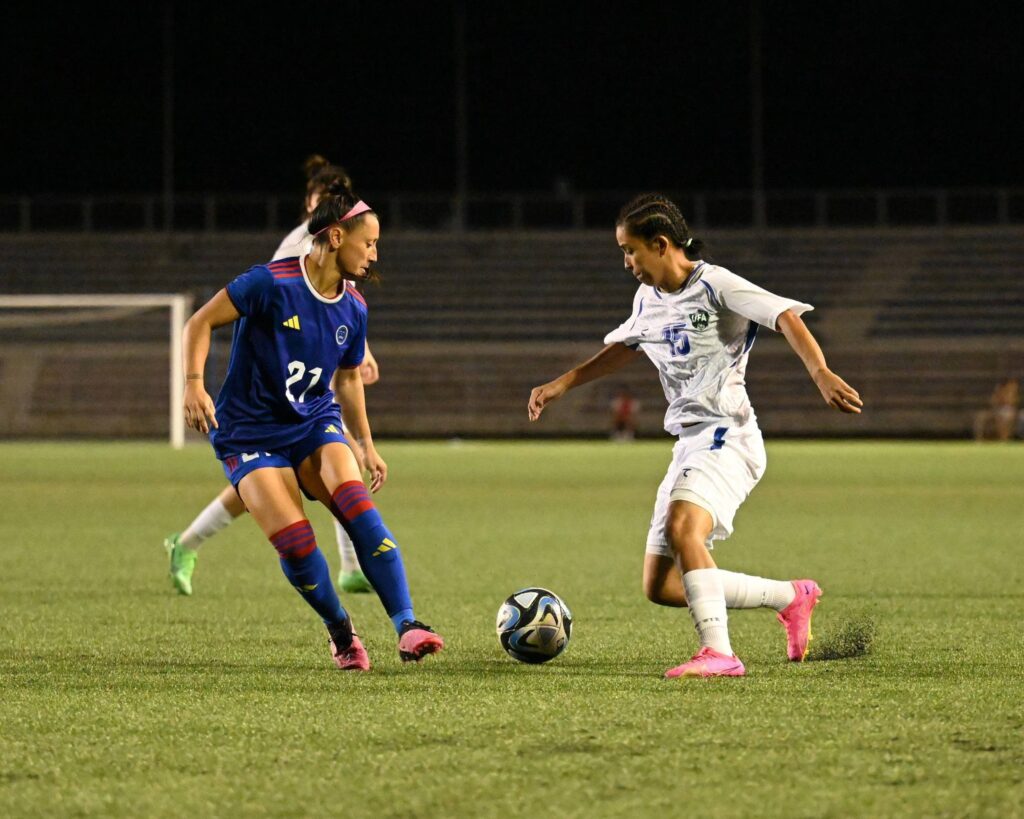
“As you mentioned, we had a double friendly in Vietnam, and when you see the results, it’s quiet, let’s say different,” she explained.
“In this period before the tournament, each game you take with some tasks. So in different games, we are solving different tasks and different goals we want to achieve.
“So each game was totally different. And yeah, 6-2 is a great win. But you know, we had great lessons when we lost 1-0 as well; maybe even more, bigger lessons than when we won by 6-2.”
With the team arriving in Sydney over the weekend ahead of their opening game against heavyweights DPR Korea at Western Sydney Stadium next Tuesday, she paid tribute to those that came before and laid the foundations for this crop of players to succeed.
“It’s huge, it’s very huge,” she said
“This group deserves it, but I don’t think that this group did all the work, because a lot of work was done before, in the football community and everything.
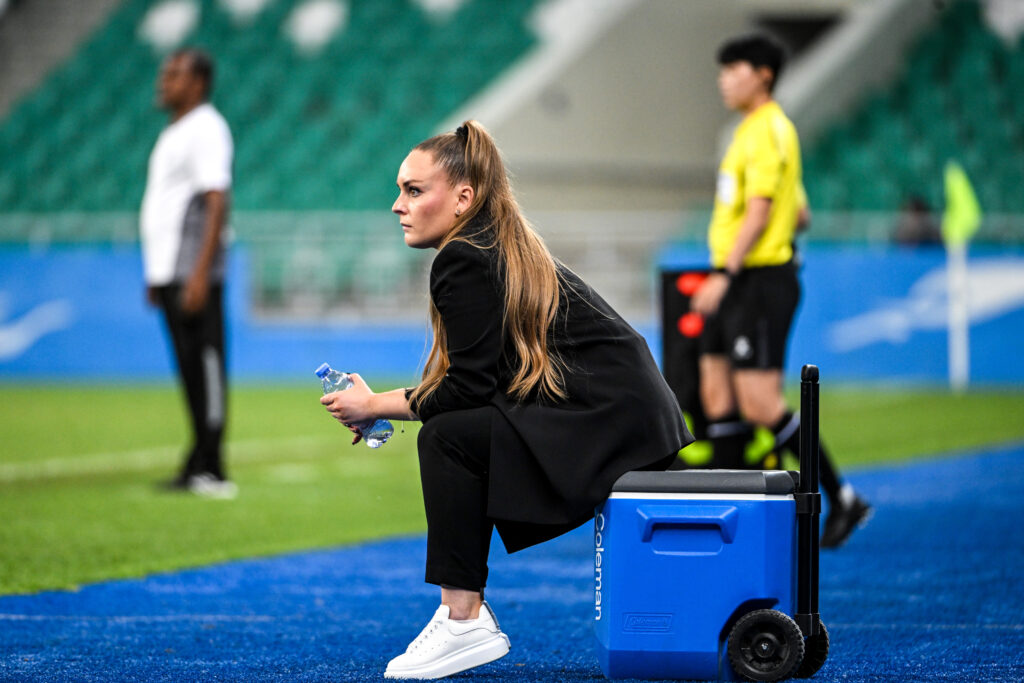
“So this, let’s say victory is not only a team victory, not only a players victory, but (a victory for the) women’s community of Uzbekistan, as well.
“The Association did a great job for us to prepare for this qualification, and we are taking big steps for us to be ready for the (Women’s) Asian Cup. So I do believe that it will be a strong step forward, and now the goal is to consistently participate in every (Women’s) Asian Cup.”
Of course, as hosts of the next tournament in 2029, qualification is already assured. While participating in Australia is important, in some respects it is simply the foundation block on a longer road towards hosting the event in three years’ time.
“Of course, we have this tournament in 2029, but we still need to think what will happen in March in Australia. Of course, if we are looking forward to the future, it will be a great step forward to participate in Australia, to feel the level of the team, and to compete against the elite of Asia teams.
“As well, we are happy because our under-20 qualified as well for the (U20 Women’s) Asian Cup, and if we see three years in front, a lot of under-20 players will join this national team in this three year period.
“So it’s also very important that both national teams compete on the biggest stage of Asia this year.”
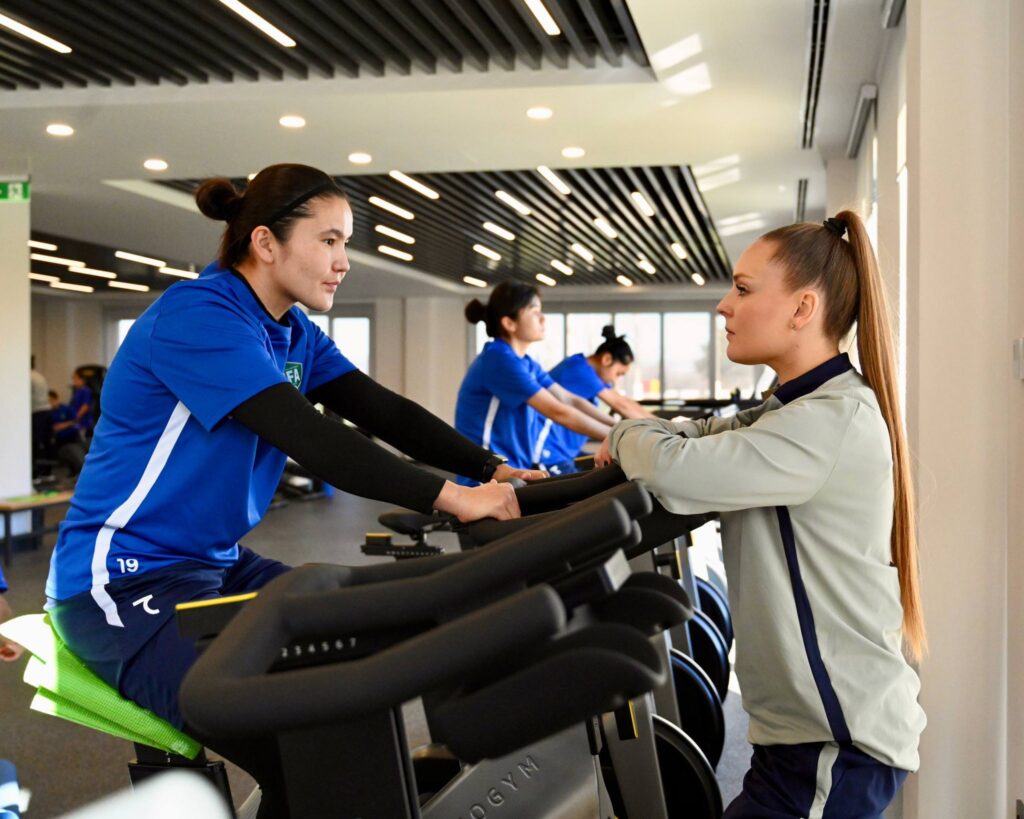
And Kulbytė is not letting their inexperience at continental level get in the way of her dreams.
“Of course, we want to perform as best as possible,” she explained.
“We dream to be in the Asian Cup, and now the team is dreaming to do a great job, and maybe, why not try to take a spot in the World Cup, or at least to go into playoffs? If you don’t have dreams, you don’t move forward.
“So yeah, we are dreaming, but we keep our feet on the floor as well.”
Listen to the full interview with Kotryna Kulbytė